Macworld演讲
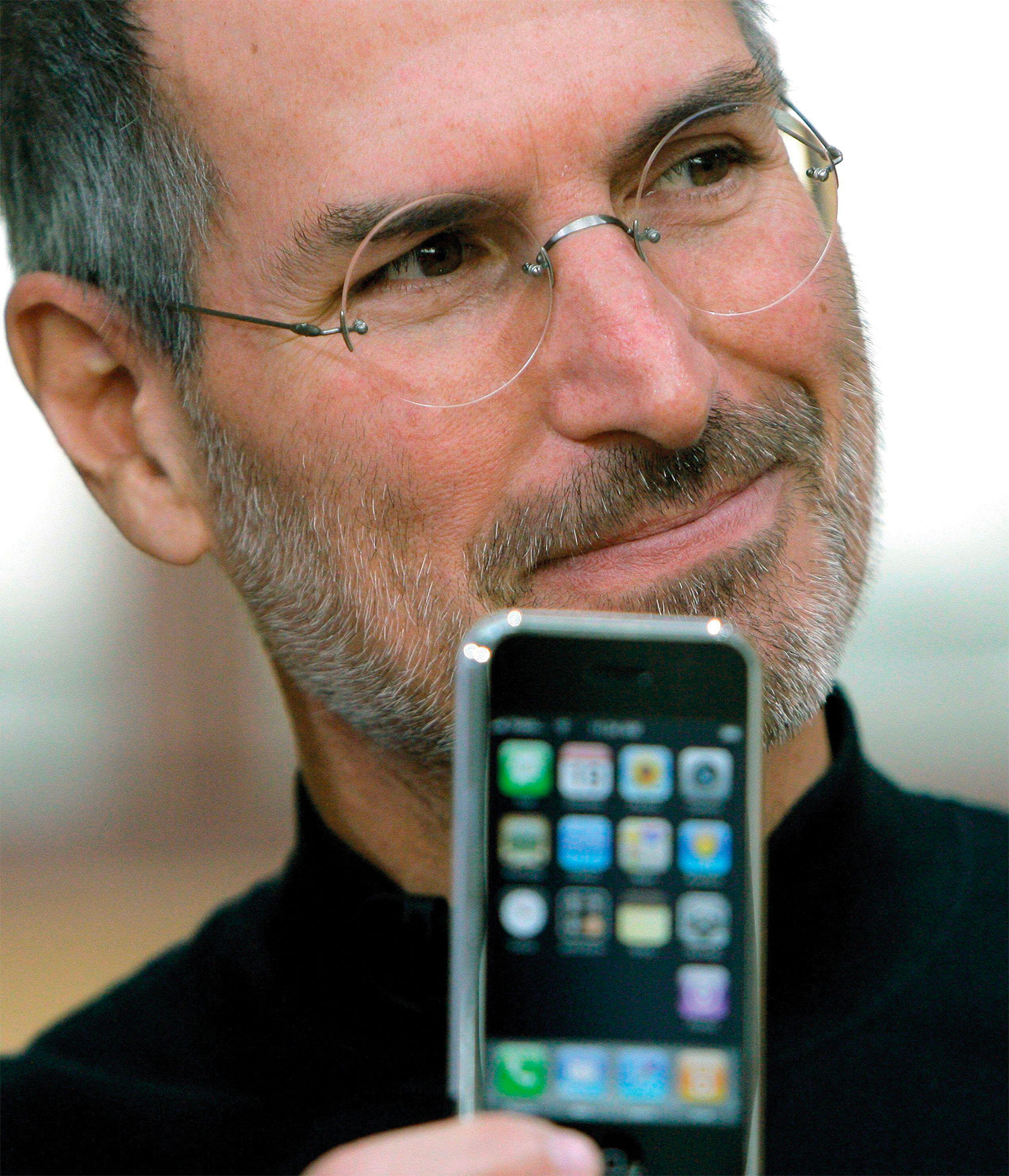
Steve holds a first generation iPhone up to his face and smiles; the phone is out of focus. 史蒂夫将第一代 iPhone 举到脸旁,面带微笑;手机处于失焦状态。
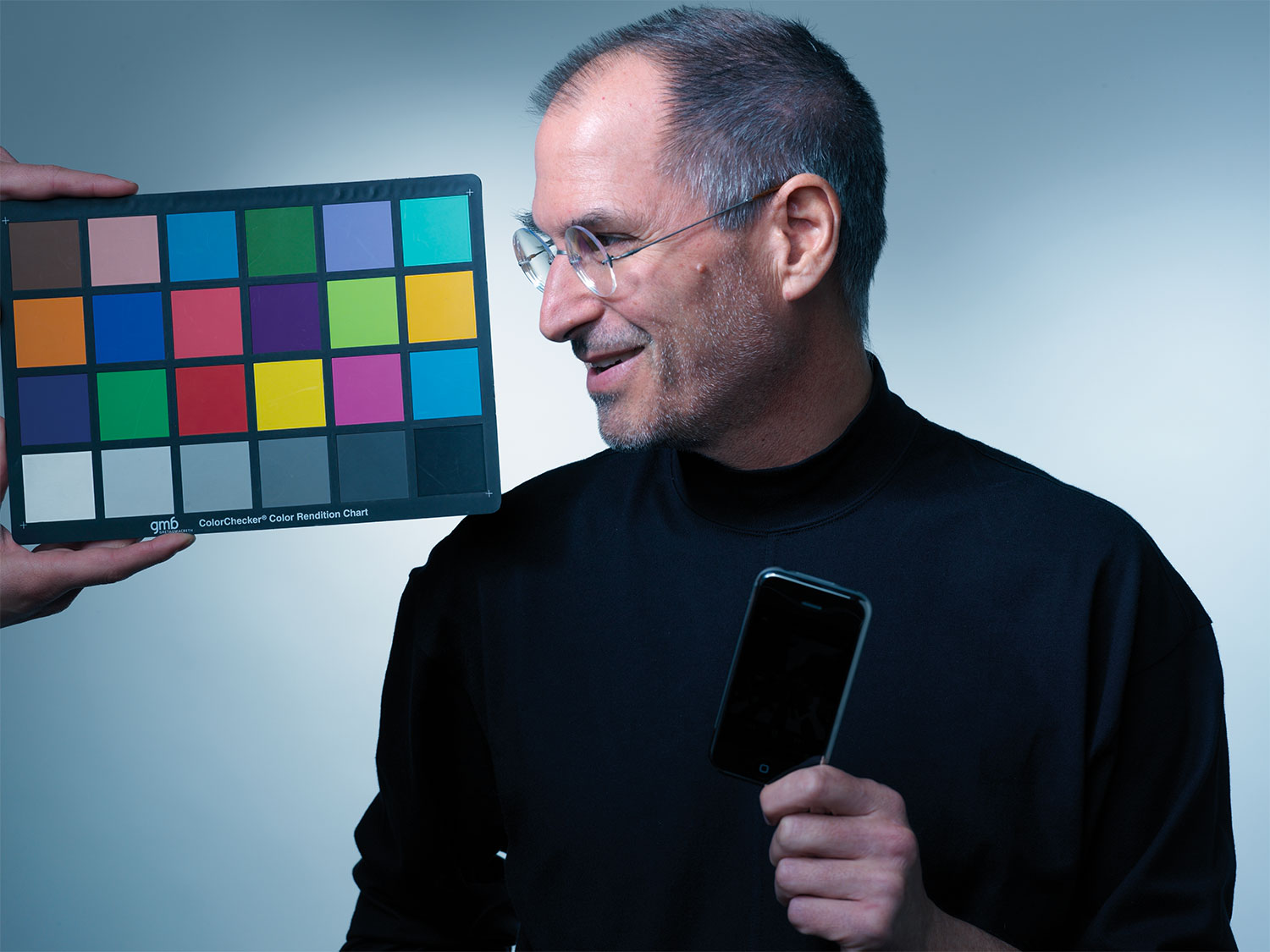
Steve, holding an iPhone, smiles and looks to the side as a pair of hands enters the frame, holding a color chart. 史蒂夫手持 iPhone,微笑着看向一侧,此时一双手拿着色卡进入了画面。
Steve shown in profile with stubbly beard and glasses. The photo is taken over his shoulder. 史蒂夫的侧面照,留着胡茬,戴着眼镜。照片是从他肩膀后方拍摄的。
背景: 2007年1月9日,史蒂夫发布iPhone
主题: "每隔一段时间,一个革命性产品会出现,改变一切"
核心概念
- 苹果 (Apple) - 史蒂夫·乔布斯创立并回归的科技巨头
- 摩托罗拉 (Motorola) - 传统手机厂商,iPhone的挑战对象
- 黑莓 (BlackBerry) - 商务智能手机的代表
- Palm (Palm) - PDA和智能手机先驱
- 诺基亚 (Nokia) - 当时全球最大的手机厂商
- 艾伦·凯 (Alan Kay) - 计算机先驱,提出"认真对待软件的人应该制造自己的硬件"
- iPhone (iPhone) - 2007年发布的革命性智能手机
- 麦金塔 (Macintosh) - 1984年推出的Mac
- iPod (iPod) - 2001年推出的iPod
- Motorola Q (Motorola Q) - 摩托罗拉的智能手机
- Palm Treo (Palm Treo) - Palm的智能手机
- Nokia E62 (Nokia E62) - 诺基亚的商务手机
- OS X (OS X) - iPhone运行的桌面级操作系统
- 多点触控 (Multitouch) - 划时代的人机交互方式,用手指替代触控笔
- 革命性用户界面 (Revolutionary User Interface) - 鼠标、点击轮、多点触控的演进
- 软硬件结合 (Software-Hardware Interplay) - 苹果的核心设计理念
- 跨越式发展 (Leapfrog Product) - 比任何现有移动设备更智能、更易用
- 认真对待软件 (Serious About Software) - 艾伦·凯的名言:"认真对待软件的人应该制造自己的硬件"
内容
中文翻译
这是我期待了两年半的一天。
每隔一段时间,一个革命性产品会出现,改变一切。而苹果——首先,如果你能在一个职业生涯中只从事其中一个,你就非常幸运。苹果一直很幸运。它能够向世界介绍其中几个。
1984年,我们推出麦金塔。它不仅改变了苹果,它改变了整个电脑行业。2001年,我们推出第一款iPod,它不仅改变了我们听音乐的方式,它改变了整个音乐行业。
那么,今天,我们要推出三个这个级别的革命性产品。
第一个是带触控功能的宽屏iPod。第二个是革命性的手机。第三个是突破性的互联网通讯设备。
所以,三样东西:带触控功能的宽屏iPod;革命性的手机;突破性的互联网通讯设备。
一个iPod,一个手机,一个互联网通讯器。一个iPod,一个手机……你们明白了吗?
这不是三个独立设备;这是一个设备。我们叫它iPhone。
今天……今天苹果要重新发明手机,这就是它。
[屏幕上显示一个iPod,点击轮位置是一个旋转拨号盘]
不,实际上,这是它。
[从口袋里掏出一部iPhone]
但我们暂时就把它放在那里。
[把iPhone放回口袋]
在我们深入了解之前,让我谈谈一类东西。最先进的手机被称为智能手机。他们是这么说的。它们通常把手机、一些电子邮件功能,加上他们说的互联网——算是婴儿版互联网——整合到一个设备中。而且它们都有这些塑料小键盘。
问题是它们不够智能,也不够好用。所以如果你在商学院101课程里画一个智能轴和易用性轴的图——普通手机大概在这里。[指向一个点,表示"不太智能, somewhat 好用"] 它们不太智能,也不太好用。智能手机确实聪明一点,但实际上更难用。它们真的很复杂。光是基本功能,人们就很难搞清楚怎么用。
嗯,我们不想做这两种东西。我们想做一个跨越式发展产品,比任何移动设备都更智能,而且超级好用。这就是iPhone。明白了吗?
所以我们要重新发明手机。现在,我们要开始……从一个革命性用户界面开始……这是多年研发的成果,当然,它是硬件和软件的交融。那么,我们为什么需要一个革命性用户界面呢?我是说,这里有四款智能手机,对吧?Motorola Q、黑莓、Palm Treo、诺基亚E62——常见嫌疑犯。它们的用户界面有什么问题呢?嗯,问题其实在于底部那四十个[按键]。就是,就是这些东西。它们都有这些键盘,无论你需要与否都在那里。而且它们都有这些控制按钮,是固定在塑料里的,对每个应用都一样。
每个应用都想要略有不同的用户界面,一套为它优化的按钮。如果你六个月后有新想法怎么办?你不能到处给这些东西加按钮。它们已经发货了。所以你怎么办?这行不通,因为按钮和控制不能改变。它们不能为每个应用改变,也不能在未来你有新想法要加入产品时改变。
那么,怎么解决这个问题呢?嗯。原来,我们已经解决了!我们在二十年前就用电脑解决了。我们用可以显示任何我们想要的位图屏幕解决了。放上任何用户界面。加上一个指点设备。我们用鼠标解决了。对吧?我们解决了这个问题。
那么,我们怎么把它带到移动设备上呢?我们要做的是去掉所有这些按钮,只做一块巨大的屏幕。一块巨大的屏幕。那么,我们要怎么和它交互呢?我们不想随身携带鼠标,对吧?那我们要怎么办?哦,触控笔,对吧?我们要用触控笔。不。不。谁想要触控笔?你得拿出来放好,还会弄丢。恶心。没人想要触控笔。所以,我们不要使用触控笔。
我们要用世界上最好的指点设备。我们要用我们与生俱来的指点设备——我们生来就有十个。我们要用我们的手指。我们要用手指触摸它。而且我们发明了一种叫多点触控的新技术,它是 phenomenal 的。它像魔法一样工作。你不需要触控笔。它比任何已出货的触摸屏都精准得多。它忽略意外的触摸,它超级智能。你可以在上面做多指手势。而且,天哪,我们给它申请了专利。
所以,所以,我们很幸运,在我们这个时代为市场带来了几个革命性用户界面。第一个是鼠标。第二个是点击轮。现在我们要把多点触控带到市场。每个革命性用户界面都使革命性产品成为可能——Mac、iPod,现在是iPhone。所以,一个革命性用户界面。
我们要在它之上用软件构建。手机上的软件就像,就像婴儿软件。它不够强大。今天我们要向你们展示一个软件突破。软件至少领先其他任何手机五年。那么,我们怎么做呢?嗯,我们从一个强大的基础开始:iPhone运行OS X。
那么,为什么,为什么我们想在移动设备上运行如此复杂的操作系统呢?嗯,因为它有我们需要的一切。它有多任务处理。它有最好的网络功能。它已经知道如何电源管理。我们在移动电脑上已经做了多年。它有 awesome 的安全性。还有合适的应用。它有从Cocoa到图形的一切,它内置了核心动画,它有OS X著名的音频和视频。它有我们想要的所有东西。而且它内置在iPhone中。这使我们能够创建桌面级应用和网络功能,对吧。不是你在大多数手机上找到的残废东西。这是真正的、桌面级应用。
现在,你知道,我们行业的先驱之一,艾伦·凯,这些年来有很多 great 的名言。我最近看到其中一句,这解释了我们对这个问题的看法——解释了我们为什么按照我们的方式做事,因为我们热爱软件。这就是那句话:"认真对待软件的人应该制造自己的硬件。"你知道,艾伦三十年前说过这句话,这就是我们的感受。所以我们第一次把突破性软件带到移动设备上。它领先其他任何手机五年。
英文原文
Speech at Macworld, Make Something Wonderful

Speech at Macworld

"Every once in a while, a revolutionary product comes along that changes everything."

Steve introduced the iPhone on January 9, 2007.

This is a day I've been looking forward to for two and a half years.

Every once in a while, a revolutionary product comes along that changes everything. And Apple has been—well, first of all, one's very fortunate if you get to work on just one of these in your career. Apple's been very fortunate. It's been able to introduce a few of these into the world.

In 1984, we introduced the Macintosh. It didn't just change Apple, it changed the whole computer industry. In 2001, we introduced the first iPod, and it didn't just change the way we all listen to music, it changed the entire music industry.

Well, today, we're introducing three revolutionary products of this class.

The first one is a widescreen iPod with touch controls. The second is a revolutionary mobile phone. And the third is a breakthrough internet communications device. So, three things: a widescreen iPod with touch controls; a revolutionary mobile phone; and a breakthrough internet communications device.

An iPod, a phone, and an Internet communicator. An iPod, a phone … Are you getting it?

These are not three separate devices; this is one device. And we are calling it iPhone.

Today … today Apple is going to reinvent the phone, and here it is.

[The screen displays an iPod with a rotary phone-style dial where the click wheel would be.]

No, actually, here it is.

[Slides an iPhone out of his pocket.]

But we're going to leave it there for now.

[Pockets the iPhone again.]

So, before we get into it, let me talk about a category of things. The most advanced phones are called smartphones. So they say. And they typically combine a phone, plus some email capability, plus they say it's the internet—it's sort of the baby internet—into one device. And they all have these plastic little keyboards on them.

And the problem is that they're not so smart, and they're not so easy to use. So if you kinda make a Business School 101 graph of the smart axis and the easy-to-use axis—phones, regular cellphones, are kinda right there. [Points to a spot indicating "not so smart, somewhat easy to use."] They're not so smart, and they're not so easy to use. Smartphones are definitely a little smarter, but they actually are harder to use. They're really complicated. Just for the basic stuff, people have a hard time figuring out how to use them.

Well, we don't want to do either one of these things. What we want to do is make a leapfrog product that is way smarter than any mobile device has ever been and super easy to use. This is what iPhone is. OK?

So we're going to reinvent the phone. Now, we're going to start … with a revolutionary user interface … the result of years of research and development, and, of course, it's an interplay of hardware and software. Now, why do we need a revolutionary user interface? I mean, here's four smartphones, right? Motorola Q, the BlackBerry, Palm Treo, Nokia E62—the usual suspects. And what's wrong with their user interfaces? Well, the problem with them is really sort of in the bottom forty [keys] there. It's, it's this stuff right here. They all have these keyboards that are there whether you need them or not to be there. And they all have these control buttons that are fixed in plastic and are the same for every application.

Well, every application wants a slightly different user interface, a slightly optimized set of buttons, just for it. And what happens if you think of a great idea six months from now? You can't run around and add a button to these things. They're already shipped. So what do you do? It doesn't work, because the buttons and the controls can't change. They can't change for each application, and they can't change down the road if you think of another great idea you want to add to this product.

Well, how do you solve this? Hmm. It turns out, we have solved it! We solved it in computers twenty years ago. We solved it with a bitmapped screen that could display anything we want. Put any user interface up. And a pointing device. We solved it with the mouse. Right? We solved this problem.

So how are we going to take this to a mobile device? What we're going to do is get rid of all these buttons and just make a giant screen. A giant screen. Now, how are we going to communicate with this? We don't want to carry around a mouse, right? So what are we going to do? Oh, a stylus, right? We're going to use a stylus. No. No. Who wants a stylus? You have to get them and put them away, and you lose them. Yuck. Nobody wants a stylus. So, let's not use a stylus.

We're going to use the best pointing device in the world. We're going to use a pointing device that we're all born with—we're born with ten of them. We're going to use our fingers. We're going to touch this with our fingers. And we have invented a new technology called multitouch, which is phenomenal. It works like magic. You don't need a stylus. It's far more accurate than any touch display that's ever been shipped. It ignores unintended touches, it's super smart. You can do multi-finger gestures on it. And boy, have we patented it.

So, so, we have been very lucky to have brought a few revolutionary user interfaces to the market in our time. First was the mouse. The second was the click wheel. And now we're going to bring multitouch to the market. And each of these revolutionary user interfaces has made possible a revolutionary product—the Mac, the iPod, and now the iPhone. So, a revolutionary user interface.

We're going to build on top of that with software. Now, software on mobile phones is like, is like baby software. It's not so powerful. Today we are going to show you a software breakthrough. Software that's at least five years ahead of what's on any other phone. Now, how do we do this? Well, we start with a strong foundation: iPhone runs OS X.

Now, why, why would we want to run such a sophisticated operating system on a mobile device? Well, because it's got everything we need. It's got multitasking. It's got the best networking. It already knows how to power manage. We've been doing this on mobile computers for years. It's got awesome security. And the right apps. It's got everything from Cocoa and the graphics, and it's got core animation built in, and it's got the audio and video that OS X is famous for. It's got all the stuff we want. And it's built right into iPhone. And that has let us create desktop-class applications and networking, right. Not the crippled stuff that you find on most phones. This is real, desktop-class applications.

Now, you know, one of the pioneers of our industry, Alan Kay, has had a lot of great quotes throughout the years. And I ran across one of them recently that explains how we look at this—explains why we go about doing things the way we do, 'cause we love software. And here's the quote: "People who are really serious about software should make their own hardware." You know, Alan said this thirty years ago, and this is how we feel about it. And so we're bringing breakthrough software to a mobile device for the first time. It's five years ahead of anything on any other phone.
思考与洞察
- 三合一的魔力: 不是三个设备,而是一个设备——重新定义产品类别。乔布斯用"一个iPod,一个手机,一个互联网通讯器"的重复,制造戏剧性的揭示效果。
- 历史对比: 1984麦金塔、2001iPod、2007iPhone——每个都改变行业。乔布斯善于用历史来建立可信度。
- 戏剧化演示: 假产品到真产品的过渡,制造惊喜效果。先展示带旋转拨号盘的iPod,再从口袋里掏出真正的iPhone。
- 重新发明: "reinvent the phone"——不是改进,是重新发明。这种大胆的语言定义了苹果的产品策略。
- 对竞争对手的讽刺: "智能手机确实聪明一点,但实际上更难用"——直接批评黑莓等传统智能手机。
- 手指是最好的触控笔: "我们与生俱来就有十个"——用手指替代触控笔的洞察,源于对人性本能的理解。
- 多点触控的革命: "像魔法一样工作"——将技术突破描述为魔法,创造敬畏感。
- 用户界面的演进: 鼠标→点击轮→多点触控,每个革命性UI都带来革命性产品。
- 软件领先五年: iPhone运行完整OS X,而非"婴儿软件",这是技术上的巨大优势。
- 艾伦·凯的智慧: "认真对待软件的人应该制造自己的硬件"——这句话成为苹果软硬件一体化战略的哲学基础。