Macworld演讲
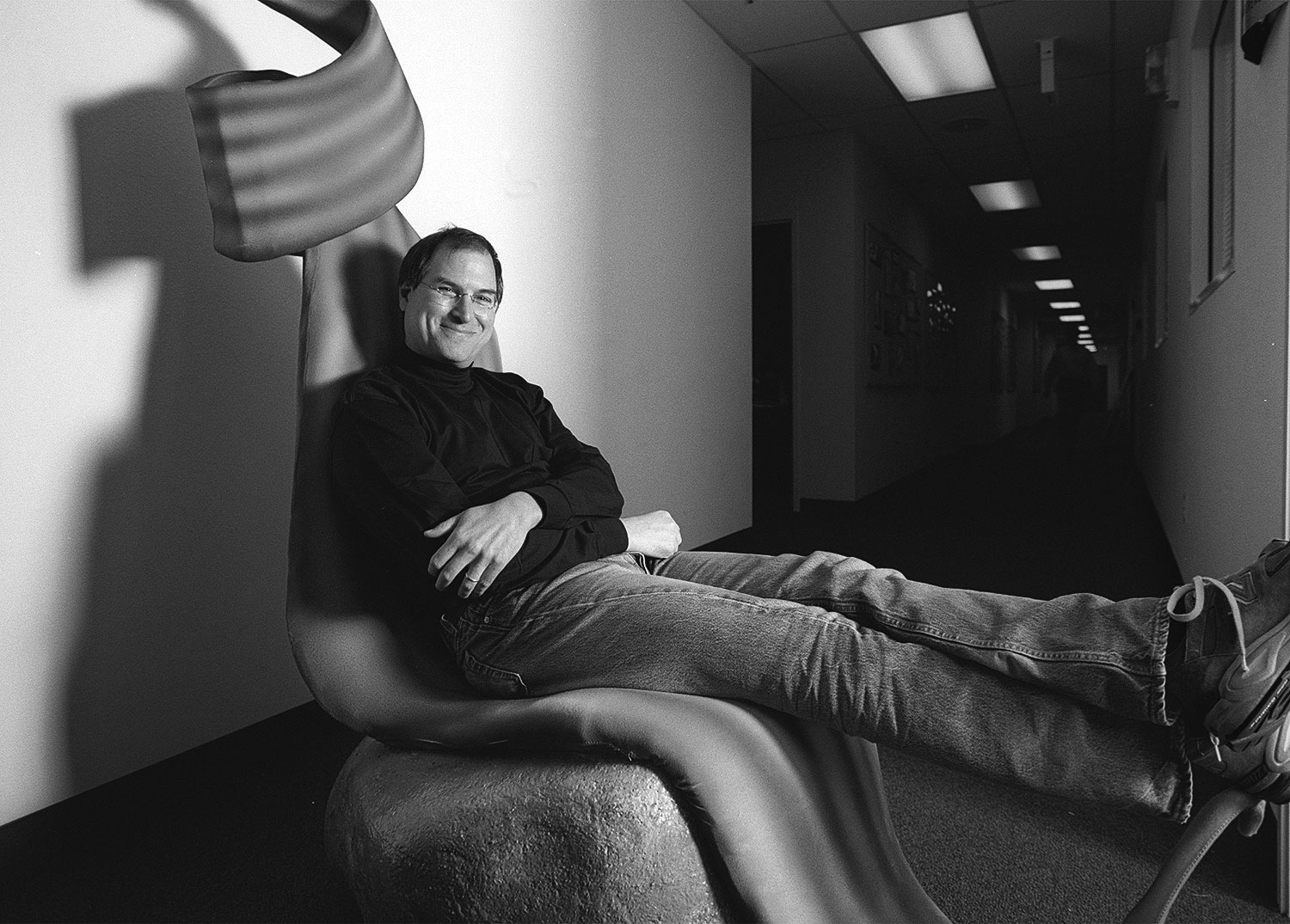
Steve relaxes with his feet up in a full-sized model of the chair of the queen from the Pixar movie A Bugs Life. 史蒂夫双脚抬起,放松地坐在皮克斯电影《虫虫危机》中女王座椅的等大模型里。
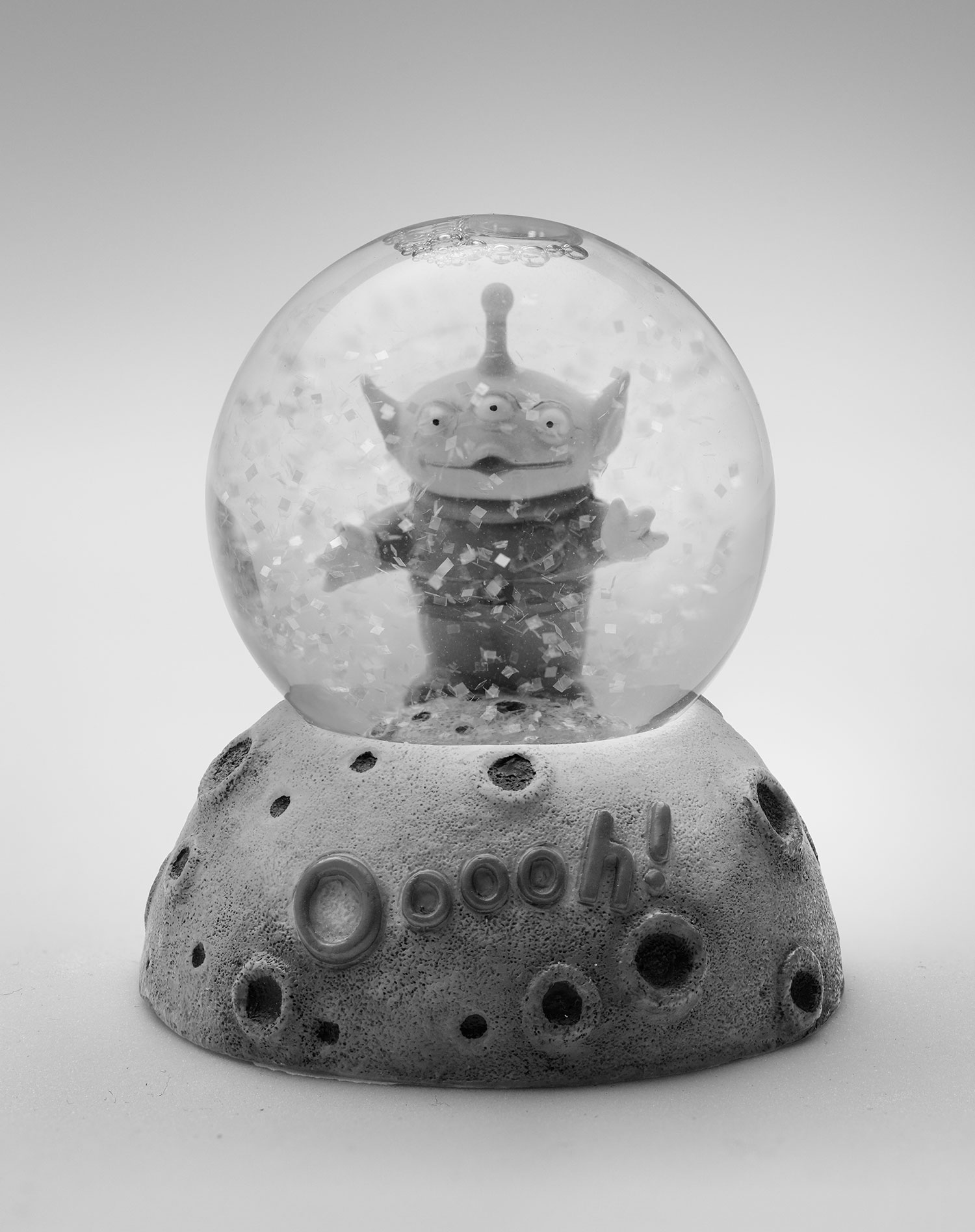
A Toy Story snow globe that Steve kept in his office, with a three-eyed alien and a base that reads: Ooooh! 史蒂夫放在办公室里的《玩具总动员》雪球,里面有一个三眼外星人,底座上写着:Ooooh!
背景: 1998年7月,史蒂夫仍在担任苹果临时CEO时,在纽约市的Macworld上发表了主题演讲。
主题: "苹果正以非常大的方式回归"
核心概念
- iMac (iMac) - 结合互联网的兴奋与Mac的简单
内容
中文翻译
非常感谢。这很好。我刚坐红眼航班赶来。我以为我今天不能来这里,我设法赶到了,所以这很好。我们今天有一些很棒的东西要谈,所以让我们开始吧。
一位名叫亚伯拉罕·马斯洛的美国人提出了一个他称为人类需求层次的理论。这个理论概念上很简单,[虽然]含义上有些深刻。这个理论是人类有需要被满足的需求,这些需求可以分层到某些层次。[人类]需要先满足底层需求,然后他们进展到下一层。当那些[需求]被满足时,他们进展到下一层。
所以,你从生理需求开始:食物、衣服和住所,比方说。如果这些被满足,或者一旦被满足,你然后开始更关心你环境的安全——最终是爱、自尊、自我实现。我不知道这是否真实,但这是亚伯拉罕相信的。
我认为这是一个好模型,所以我今天借用它来构建……史蒂夫·乔布斯的版本[观众笑],我称之为苹果怀疑层次结构。
让我向你们解释这个。当我一年前来到苹果时,我只听到,"苹果快死了。苹果无法生存。"
结果每次我们说服人们我们在某一层完成了某件事,他们就提出新的东西。
我过去认为这是一件坏事。我想,"哦,天哪,他们什么时候才会相信我们能够扭转这个东西?"但实际上,现在我认为这很棒,因为这意味着我们现在说服了他们我们解决了上个月的问题——他们已经在下一个问题上了。
所以我想,"好吧,让我们领先游戏。让我们试着弄清楚所有问题会是什么并绘制我们的位置。"所以这就是苹果怀疑层次结构。它借用了马斯洛博士的理论。
所以我们遇到的第一层,一年前,是生存。[观众鼓掌。]很多人认为苹果处于某种死亡螺旋中,我认为有一定道理。我们做了什么?我们做了很多很多事,但在人们心中突出的三件事是:我们带来了新的管理团队来经营公司,新的董事会有一些非常有经验的人,我们与微软达成了协议。世界上最大的软件公司想[要]帮助苹果是一个没有逃过很多人注意的事实,它为我们正在做的事情增加了很多可信度。
这三件事的组合和很多其他中等大小的事情,我认为,相当快地说服人们生存,至少在短期内,不是问题。它给了我们一些时间来证明我们可以完成其他事情。
一旦我们做了这些事情,大家马上上升了一层。[……]如果不是关于生存,那就是,"好吧,但Mac市场没有稳定的业务。"那是层次的下一层。所以我们必须开始证明我们有稳定的业务,而且可以从Macintosh市场中做出一个,因为它是一个伟大的市场。
所以我们做了什么?嗯,最重要的是利润。最终,那是很多人看的。新管理团队的第一个完整季度,苹果交付了4700万美元的利润[……]。在下一个财年季度[……]苹果交付了一个季度5500万美元的利润。[观众鼓掌。]这走了很长一段路来说服很多怀疑者。我们将在一周后的今天宣布我们第三财季的结果,刚刚在六月底结束。我非常高兴地告诉你,这将是我们连续第三个盈利的季度。[……]
就人员而言,我们的留任率大幅上升。我们现在几乎没失去公司的人,我们正在雇佣非常优秀的人进入公司。我们还重新调整了我们的分销渠道[……]我们开始了一个品牌广告活动——围绕"Think Different"——和一些非常具体的产品广告。[……]我们投资了在线商店。[……]我们现在是互联网上最大的电子商务网站之一。[……]那太棒了。
所以所有这些事情的总体是,苹果的市场价值从一年前的约18亿美元,上升到昨天约40亿美元。我不知道今天是什么。
这意味着人们看到了稳定的业务,这很好,和一个受控的业务,这也很好。
那么,他们做什么?嗯,他们不寄给我们卡片或其他东西。他们只是进入下一个。下一个是什么?"好吧,如果你生存了,你有稳定的业务,好吧,你的产品战略是什么?你是产品驱动的公司;你最好有个非常好的产品战略。"
当我们一年前到公司时,有很多产品。有产品平台——十五个产品平台——和每个的无数变体。我自己都搞不清这个。大约三周后,我说,"我们要如何向其他人解释这个,当我们自己甚至不知道向朋友推荐哪个产品时?"没有办法做到。
所以我们回到商学院101,说,"人们想要什么?"嗯,他们想要两种产品。他们想要消费产品[……]我们需要专业产品,因为我们的设计和出版市场想要专业产品。[……]在这两个类别中,我们需要台式和便携型号。
这告诉我们的是,如果我们有四个伟大的产品,那就是我们需要的。事实上,如果我们只有四个,我们可以把A团队放在每一个上。如果我们只有四个,我们可以每九个月而不是每十八个月更新它们。如果我们只有四个,我们可以在推出第一代时处理每一代的下一代或两代。所以我们决定这样做——专注于四个伟大的产品。
我们推出的第一个,当然,是台式专业产品,就是Power Mac G3。[……]下一个产品是专业便携。如你所知,那是我们的新PowerBook G3。[……]现在,我们也在5月6日宣布我们正在开发消费便携产品,我们将在明年上半年宣布它。我们正在努力工作,我认为它会相当好。
这把我们带到消费台式产品和今天我们要花相当多时间的东西,当然,是iMac,它结合了互联网的兴奋与Mac的简单。那是我们在这个产品中的目标。
当我们一年前到苹果时,很清楚在第一个月内苹果正在放弃消费市场,因为苹果在2000美元以下没有引人注目的产品,而且已经有一段时间没有了。我们立即开始一个计划来建造我们知道如何做的最厉害的消费品——那就是iMac。
所以我们真的、真的对这东西很高兴。它 gorgeous。我们相信它会改变电脑的外观和应该看起来的方式。
所以我们生存了。我们已经证明我们有一个非常伟大、稳定的业务。我们布置了一个奇妙产品战略的路线图。而且我们正以空前的数量让应用回到Mac上。那么,你还能要求什么?
好吧,总有东西,对吧?最后一个是增长!"好吧,如果所有这些东西这么好,给我看一些增长。你们将如何增长?"
对。再一次:当我听到这些事情时,我认为这很棒,因为这意味着我们正在构建下面的层次,人们在看下一层。[……]下一件要怀疑的事情是什么?增长。那么我们要对增长做什么?
一年前,当新管理团队到苹果时,我们看市场,我们说虽然苹果的市场份额下降了,但它在设计和出版市场仍然非常强大,苹果的市场份额在50到90之间,取决于你看哪个细分。而且[市场份额也强]在教育市场,苹果拥有超过一半的安装基数和约35%的新销售单位——比任何人都大。
我们没说的是,苹果在消费市场迅速下降,一个它发明的市场。苹果发明了向消费者销售电脑的市场,然而它几年来未能推出引人注目的消费价位产品。所以即使我们没有谈论它,我们开始了一个计划来以复仇的方式回到消费市场。这是我们看到自己巨大增长的地方。我们在设计和出版市场做得非常好,开始在教育市场做得更好——但加上消费市场将使那两个更强。而且我们将用iMac来做。
在电脑行业没有比苹果更强大的品牌。苹果的品牌在全世界与迪士尼、索尼和耐克在认可度和消费者忠诚度方面并列。现在,也值得指出的是,这张幻灯片上的其他三个品牌都有过严重问题。看迈克尔·艾斯纳到那里时的迪士尼。看过去半打的耐克和索尼。但当这些公司理顺了它们的问题,它们的品牌比以往任何时候都更强。品牌需要几十年来建立。我们认为我们有世界上最好的之一。
我们相信随着价格点下降,随着消费市场开花,设计和时尚变得更加重要。让我给你举个例子。这是[图片]世界上最流行的手表。它流行不是因为它比其他任何手表更好地报时。它流行是因为它的设计。我给你一个有趣的统计数据:十年前,平均美国人拥有一块手表。因为设计进入手表市场,今天平均美国人拥有七块手表。好吗?七块手表因为设计。因为时尚。
现在,当我们做梦时,我们梦想这个。对吧?[观众笑。]而且我在一年前在苹果发现的伟大乐趣之一是我一生中见过的最好的工业设计团队。新PowerBook G3和iMac的设计——它们都在苹果内部由一些才华横溢、勤奋的人完成。你会看到苹果持续不断的非常创新的设计——我认为比行业其他公司好一英里。
这是四个极其强大、独特、引人注目的资产:品牌,安装基数,特别是在消费和教育市场,我们的设计能力真正把这些产品带到时尚的消费空间,以及我们的产品比竞争对手的设置和使用简单得多。[……]
所以,再次,回到亚伯拉罕·马斯洛:他创造了他的需求层次,我们今天借用它来审视一个怀疑层次,它跟随我们过去一年,因为我们慢慢地一步一步证明,苹果正以非常大的方式回归。
英文原文
Speech at Macworld, Make Something Wonderful

Speech at Macworld

"Apple is coming back in a very big way."

Steve was still interim CEO of Apple when he gave the keynote address at Macworld in New York City in July 1998.

Thank you very much. This is good. I just got off a red-eye to get here. I didn't think I could be here today, and I managed to make it, so this is good. We've got some great stuff to talk about today, so let's get into it.

An American named Abraham Maslow came up with a theory that he called the human hierarchy of needs. And this theory was a simple one in concept, [though] somewhat profound in its implications. This theory was that humans have needs that must be met, and these needs can be stratified into certain levels. [Humans] need the bottom needs to be met first, and then they progress to the next level. And when those [needs] are met, they progress to the next level.

So, you start off with the physiological needs: food, clothing, and shelter, let's say. If those are met, or once those are met, you then start to be concerned more with the safety of your environment—and eventually with love, with esteem, with self-actualization. I don't know if this is true or not, but this is what Abraham believed.

And I thought this was a good model, so I borrowed it today to construct… Steve Jobs's version of this [audience laughs], which I call the Apple Hierarchy of Skepticism.

Let me explain this to you. When I came to Apple a year ago, all I heard was, "Apple is dying. Apple can't survive."

And it turns out that every time we convince people that we've accomplished something at one level, they come up with something new.

I used to think this was a bad thing. I thought, "Oh, jeez, when are they ever going to believe that we're going to be able to turn this thing around?" But actually, now I think it's great, because what it means is we've now convinced them that we've taken care of last month's question—and they're onto the next one.

So I thought, "Well, let's get ahead of the game. Let's try to figure out what all the questions are going to be and map out where we are." So that's what the Apple Hierarchy of Skepticism is. And it borrows from Dr. Maslow.

So the first level, what we encountered a year ago, was survival. [Audience applauds.] A lot of people thought Apple was in some sort of death spiral, which I think there was some truth to. What did we do? We did many, many things, but the three things that stood out in people's minds were: we brought in a new management team to run the company, a new board of directors that's got some phenomenally experienced people on it, and we did a deal with Microsoft. The largest software company in the world want[ing] to help Apple was a fact that didn't escape very many people, and it added a lot of credibility to what we were doing.

The combination of these three things and a lot of other medium-sized things, I think, convinced people fairly rapidly that survival, at least in the short term, was not an issue. And it gave us some time to demonstrate that we could accomplish some other things.

Immediately, once we did these things, then everybody moved up a level. […] If it wasn't about survival, it was, "Well, but there's no stable business in the Mac market." That was the next level of the hierarchy. So we had to start demonstrating that we had a stable business, and that one could be made from the Macintosh market, because it's a great market.

So what did we do? Well, the most important thing was profits. In the end, that's what a lot of people look at. And the first full quarter of the new管理团队, Apple delivered profits of $47 million […]. And in the next fiscal quarter […] Apple delivered a quarter with $55 million of profits. [Audience applauds.] This went a long way to convincing a lot of the skepters. And we will be announcing the results of our third fiscal quarter, the one that just ended at the end of June, a week from today. And I'm very pleased to tell you that it will be our third consecutively profitable quarter. […]

In terms of people, our retention has gone way up. We're losing hardly any people from the company now, and we're hiring incredibly good people into the company. We also realigned our distribution channels […] and we began an advertising campaign for brand—around "Think Different"—and for some very specific product advertising. […] We invested in an online store. […] We are one of the largest ecommerce sites now on the internet. […] And that's terrific.

So the aggregate of all of these things was that the market value of Apple's risen from about $1.8 billion a year ago, to about $4 billion yesterday. I don't know what it is today.

What this means is that people are seeing a stable business, which is good, and a business that is under control, which is also good.

So what do they do, then? Well, they don't send us a card or anything. They just go onto the next one. What's the next one? "Well, if you've survived and you've got a stable business, well, what's your product strategy? You're a product-driven company; you better have a doggone good product strategy."

When we got to the company a year ago, there were a lot of products. There were the product platforms—fifteen product platforms—and a zillion variants of each one. I couldn't even figure this out myself. After about three weeks, I said, "How are we going to explain this to others when we don't even know which products to recommend to our friends?" There was no way to do it.

So we went back to Business School 101 and said, "What do people want?" Well, they want two kinds of products. They want consumer products […] and we need pro products because our design and publishing market wants pro products. […] And in each of those two categories, we need desktop and portable models.

What this told us was if we had four great products, that's all we need. And as a matter of fact, if we only had four, we could put the A team on every single one of them. And if we only had four, we could turn them all every nine months instead of every eighteen months. And if we only had four, we could be working on the next generation or two of each one as we're introducing the first generation. So that's what we decided to do—to focus on four great products.

And the first one that we introduced, of course, was the desktop pro product, which was the Power Mac G3. […] The next product was the pro portable. And as you know, that is our new PowerBook G3. […] Now, we also announced on May 6th that we are developing a consumer portable product, and that we will announce it in the first half of next year. And we're hard at work on that, and I think it's going to be quite nice.

Which brings us to our consumer desktop product and something we're going to spend a fair bit of time on today, which, of course, is the iMac, which combines the excitement of the internet with the simplicity of a Macintosh. And that was our goal in this product.

When we got to Apple a year ago, it was very clear within the first month that Apple was walking away from the consumer market because Apple didn't have a compelling product under $2,000 and had not had one for some time. We immediately began a program to build the most kickass consumer product we knew how to do—and that's the iMac.

So we're really, really happy with this thing. It's gorgeous. We believe it's going to change the way computers look and should look.

So we've survived. We've demonstrated that we've got a really great, stable business. We've laid out the road map of a fantastic product战略. And we're getting apps back on the Mac in unprecedented numbers. So, what more could you ask for?

Well, there's always something, right? The last one is growth! "Well, if all this stuff's so good, show me some growth. How are you going to grow?"

Right. And again: when I hear these things, I think it's great, because what it means is we're building the layers below and people are looking at the next layer. […] What's the next thing to be skeptical about? Growth. So what are we going to do about growth?

A year ago, when the new management team got to Apple, we looked at the marketplace and we said that although Apple's market share has declined, it's still extraordinarily strong in the design and publishing market, where Apple's market share is between 50 and 90, depending on what segment you look at. And [market share is also strong] in the education market, where Apple owns over half of the installed base and about 35 percent of the new selling units—bigger than anybody else.

What we didn't say was that Apple had declined rapidly in the consumer market, a market that it invented. Apple invented the market for selling computers to consumers, and yet it had failed to come out with compelling products at consumer price points for several years. So even though we didn't talk about it, we began a program to get back into the consumer market with a vengeance. And this is where we see a tremendous amount of growth for ourselves. We are doing extremely well in the design and publishing market, and starting to do much better in the education market—but adding the consumer market to that will make both of those even stronger. And we're going to do it with the iMac.

There is no brand in the computer行业 that is remotely as strong as Apple's. Apple's brand around the world is right up there with Disney and Sony and Nike in terms of recognition and in terms of consumer loyalty. Now, it's also worth pointing out that the other three brands on this slide have all had serious problems. Look at Disney when Michael Eisner got there. Look at Nike and Sony over the last half-dozen years. But when these companies have straightened out their problems, their brands have come back stronger than ever. Brands take decades to build. And we think we have one of the best in the world.

We believe that as the price points come down, as the consumer market blossoms, design and fashion become even more important. Let me give you an example. This is [an image of] the most popular watch in the example. It's popular not because it tells time better than any other watch. It's popular because of its design. I'll give you an interesting statistic: ten years ago, the average American owned one watch. Because of design entering the watch market, today the average American owns seven watches. OK? Seven watches because of design. Because of fashion.

Now, when we dream, we dream of this. Right? [Audience laughs.] And one of the great joys that I found at Apple a year ago was the best industrial design team I've ever seen in my life. The designs for the new PowerBook G3 and the iMac—they're all done inside Apple by some brilliant, brilliant, super hardworking people. And you're going to see a continual stream of very innovative design out of Apple—I think the best in the industry by a mile.

These are four incredibly powerful, unique, compelling assets: the brand, the installed base, especially in the consumer and education markets, the ability of our design to really take these products into that consumer space of fashion, and the fact that our products are dramatically simpler to set up and use than our competition's. […]

So, again, going back to Abraham Maslow: he created his hierarchy of needs, and we've borrowed it today to take a look at a hierarchy of skepticism that's followed us for the last year as we've slowly demonstrated, step by step, that Apple is coming back in a very big way.
思考与洞察
- 怀疑层次结构: 借鉴马斯洛需求层次理论,创造苹果怀疑层次
- 四层怀疑: 生存→稳定业务→产品战略→增长
- 生存: 新管理团队、新董事会、与微软协议
- 稳定业务: 连续盈利季度,市值从18亿到40亿
- 产品战略: 从15个平台简化为4个伟大产品
- iMac: "最厉害的消费品",改变电脑外观
- 增长策略: 重回消费市场,用iMac实现增长
- 四大资产: 品牌、安装基数、设计能力、易用性
- 设计重要性: 手表例子——设计让人们从1块手表到7块
- 品牌力量: 与迪士尼、索尼、耐克并列
- 苹果回归: 一步一步证明苹果正以非常大的方式回归