史蒂夫谈创立苹果公司
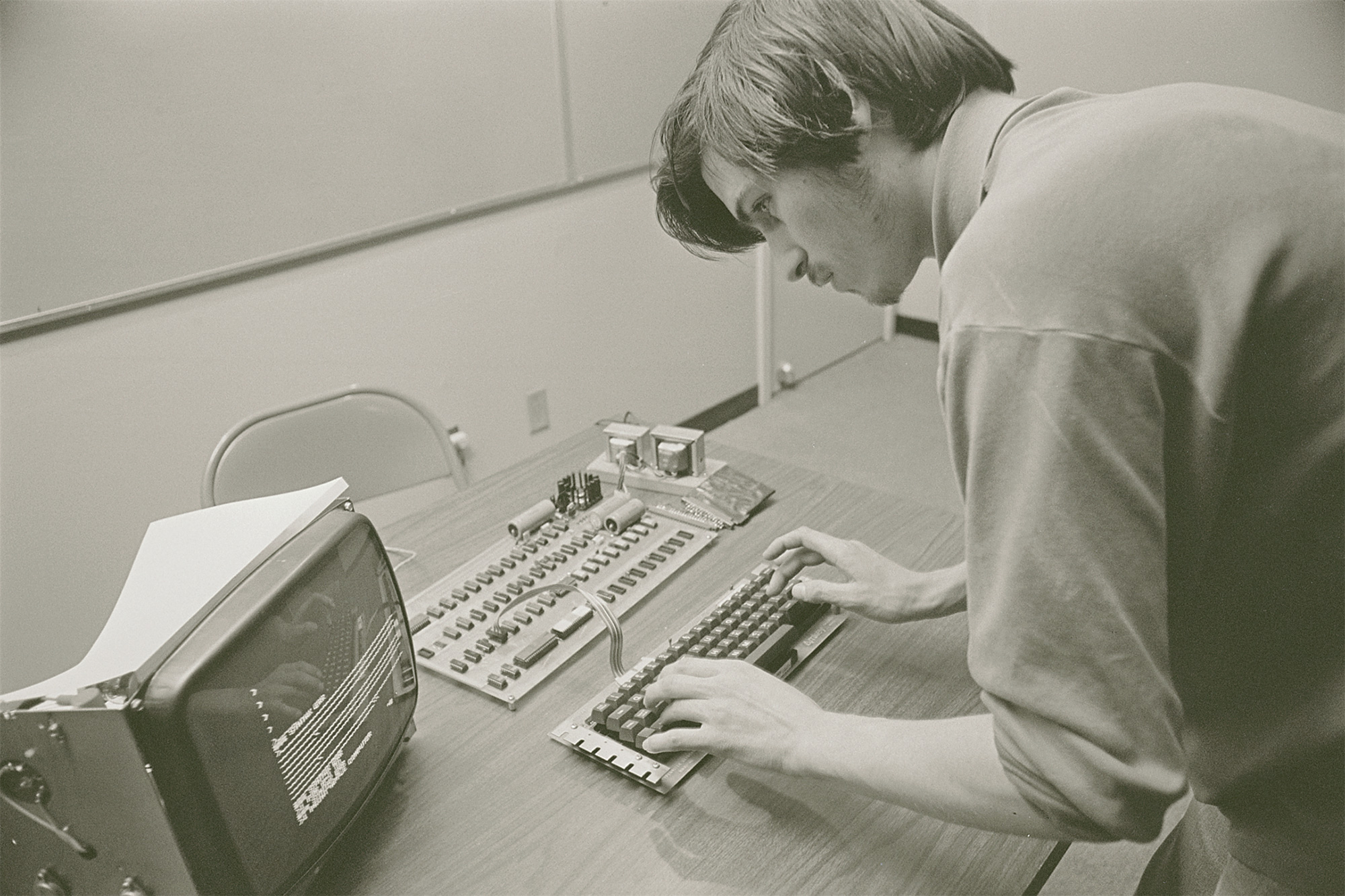
Steve hunches over a wooden desk, his hands on a keyboard hooked up to an Apple I circuit board. 史蒂夫俯身在木桌前,双手放在连接着 Apple I 电路板的键盘上。
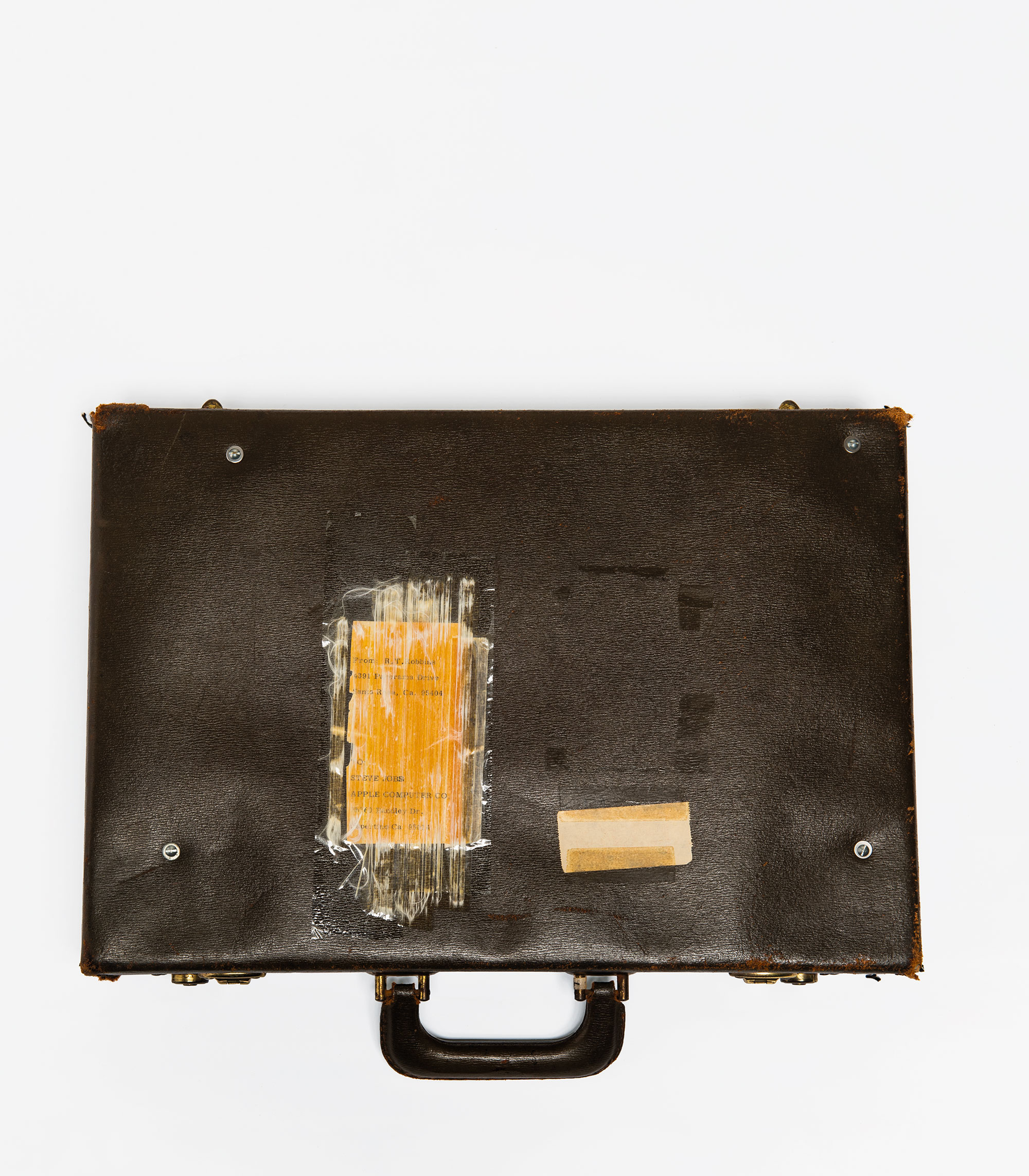
A battered dark brown briefcase, closed. The front has two pieces of paper attached using clear tape. 一个磨损的深棕色公文包,处于闭合状态。正面用透明胶带粘着两张纸。
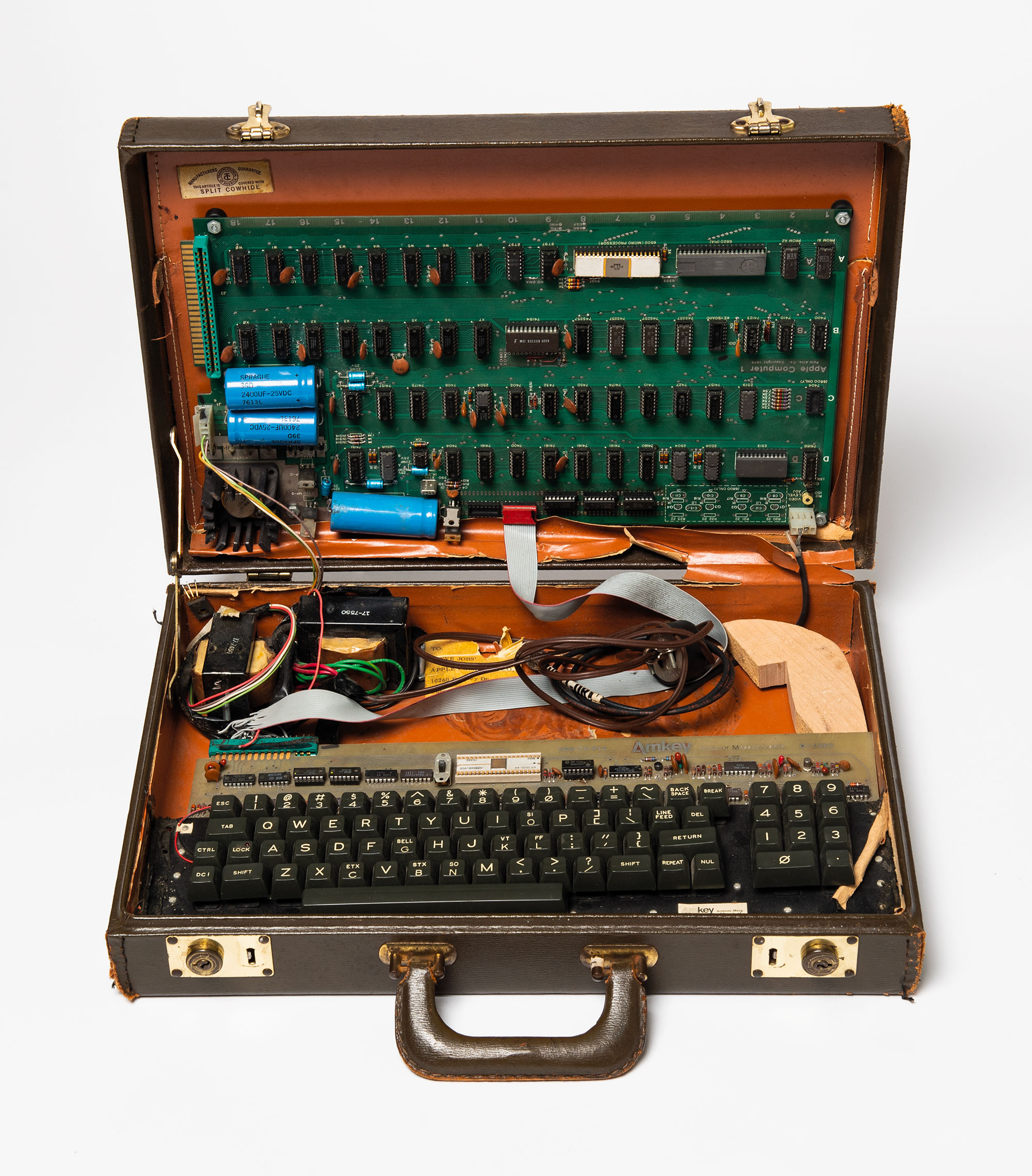
An open briefcase. The top half houses an Apple I circuit board, wired up to a keyboard in the bottom half. 打开的公文包。上半部分装着 Apple I 电路板,通过线缆与下半部分的键盘相连。
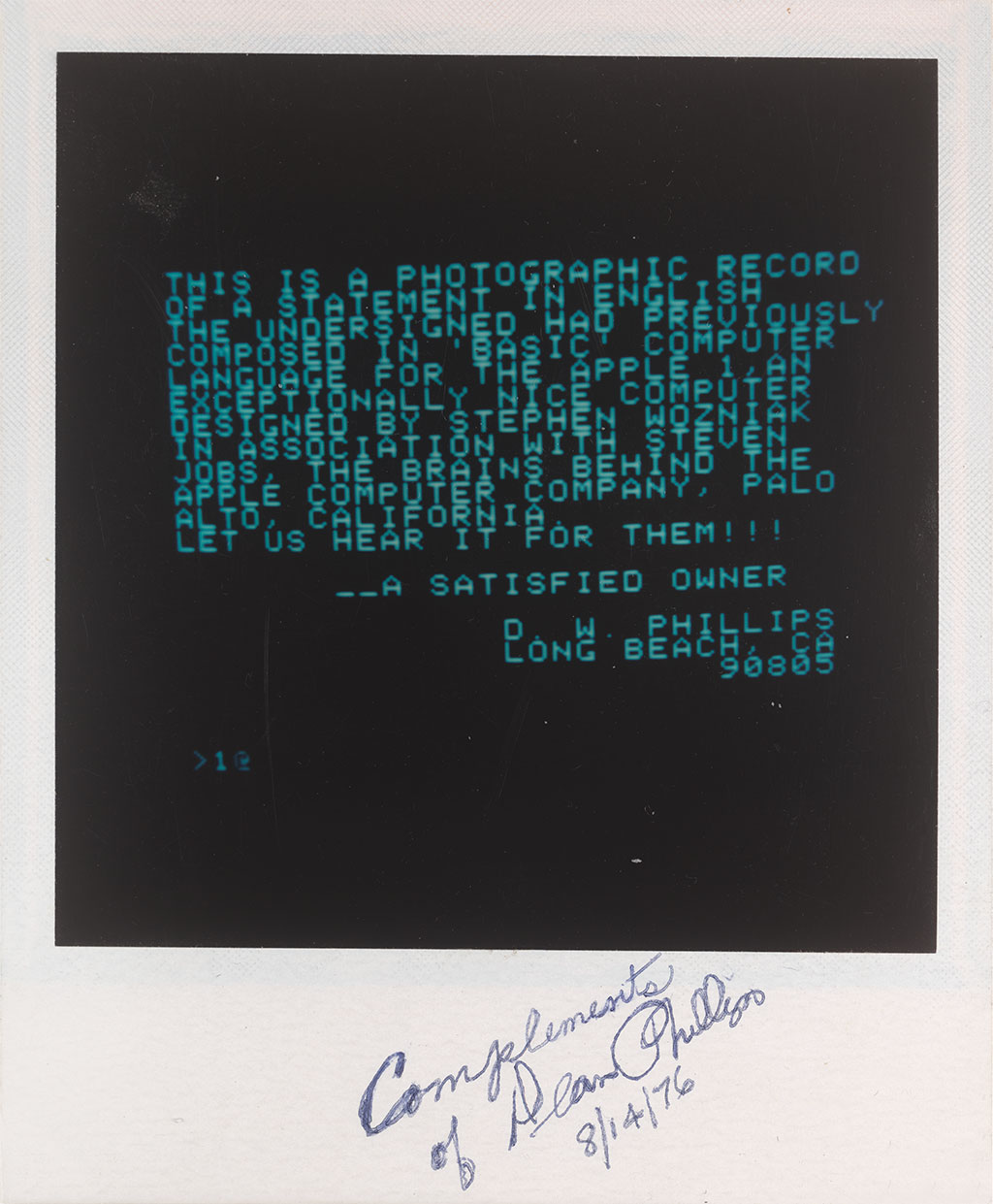
A Polaroid of a computer screen, with a fan letter praising Woz and Steve. A handwritten note dates it to 1976. 一张电脑屏幕的宝丽来照片,附有一封赞扬沃兹和史蒂夫的粉丝来信。手写标注日期为 1976 年。
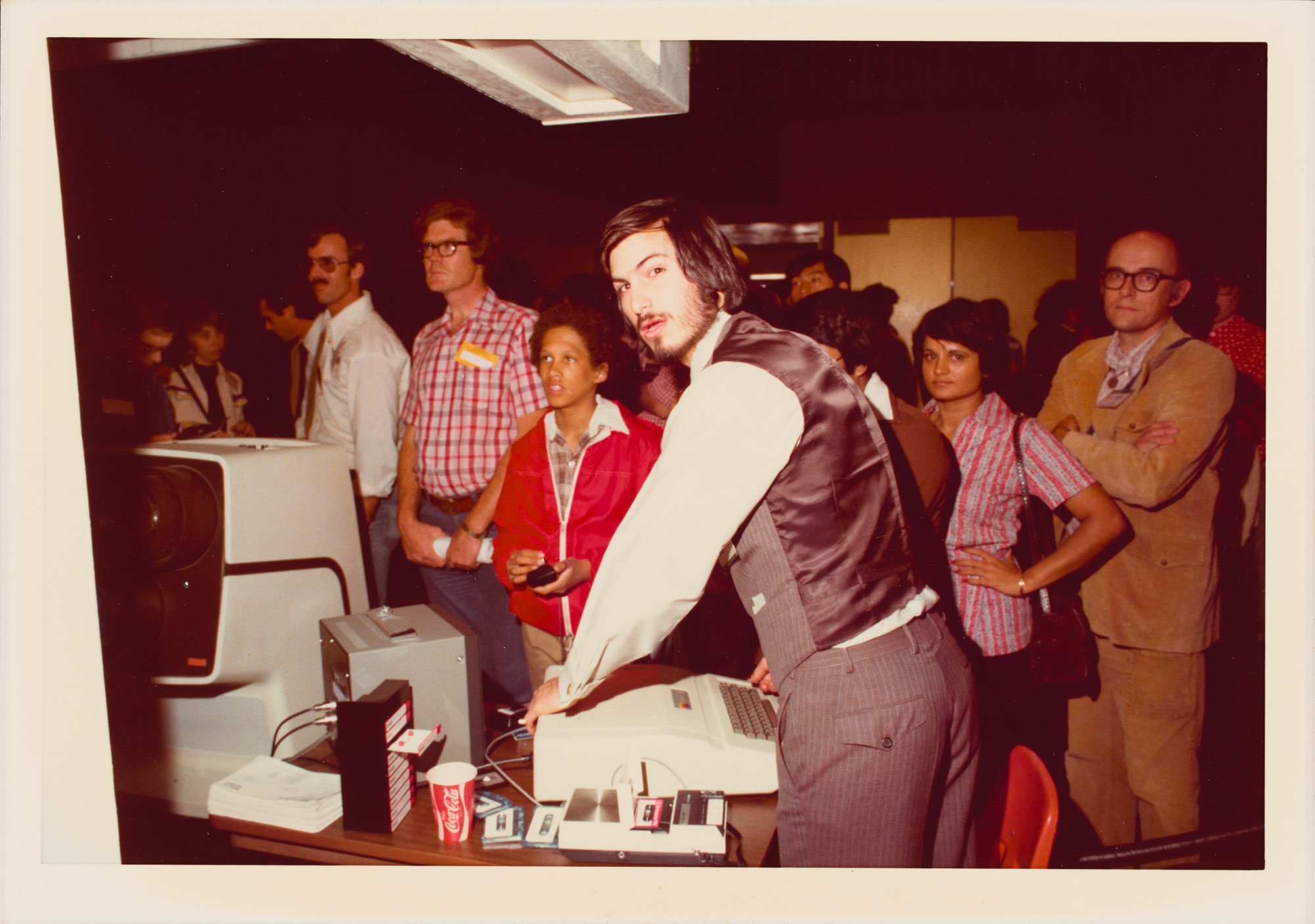
Wearing suit pants and a vest, Steve is in front of a small crowd, looking over his shoulder at the camera. 史蒂夫身着西裤和马甲,站在一小群人面前,回眸看向镜头。
核心概念
- 史蒂夫·沃兹尼亚克 (Wozniak partnership) - 十三岁遇见沃兹,电子爱好绑定一生
- 比尔·费尔南德斯 (Bill Fernandez) - 朋友,在他家车库遇见沃兹
- 自力更生 (Bootstrapping) - 卖HP计算器和大众小巴筹资金
- 印刷电路板 (Printed circuit board) - 从50小时手工到1小时组装
- Apple I (Apple I) - 苹果第一款产品
- 被拒绝是机会 (Rejection is opportunity) - HP和Atari都不看好,于是自己开公司
- 惠普 (Hewlett-Packard) - 沃兹工作的地方,拒绝了电脑想法
- 雅达利 (Atari) - 乔布斯工作的地方,拒绝了电脑想法
内容
中文翻译
1984年,史蒂夫回忆苹果背后的友谊
我十三岁时在我朋友的车库遇见了沃兹,他当时大概十八岁。他搬到了我朋友比尔·费尔南德斯家所在的街上,我当时在比尔家。我们最后聊了几个小时。我对他印象深刻。我觉得他很棒。他很有幽默感,我们有一个共同兴趣(电子),这把我们绑在一起,尽管在其他方面我们完全不同。我们有点像各自轨道上运行的两颗行星,偶尔相交。那里有一种纽带,只要我们俩活着就会持续。
1996年,苹果庆祝二十周年之际,史蒂夫回忆一个青少年爱好如何变成了生意
我们(沃兹和我)造电脑的原因是我们想要一台,但我们买不起。那时它们要几千美元。我们只是两个青少年。我们开始尝试造电脑,在硅谷到处搜寻零件。经过几次尝试后,我们设法拼凑出了Apple I。我们所有的朋友都想要。他们想造。结果手工组装一台要花大约五十个小时。这占用了我们所有的业余时间,因为我们的朋友不擅长组装,所以沃兹和我在帮他们组装。我们想,如果我们能得到所谓的印刷电路板,你可以直接插入零件而不用手工焊接整件东西,我们可以把组装时间从大约五十个小时缩短到大约一个小时。沃兹卖掉了他的HP计算器,我卖掉了我的大众小巴,我们凑够了钱请人帮我们设计一个印刷电路板。我们的目标只是把它们作为原始印刷电路板卖给我们的朋友,赚够钱弥补我们的计算器和交通工具。
发生的事情是,早期的电脑商店之一,事实上是世界上第一家电脑商店,当时在Mountain View,说:"嗯,我要五十台这种电脑,但我要整机。"这是我们从未想过的转折。我们去买了组装一百台电脑的零件。我们组装了五十台并交付了。我们拿到现金,跑回去付给卖零件给我们的人。然后我们遇到了经典的马克思式利润实现危机,就是我们的利润不是流动的——它是五十台放在地板上的电脑。我们决定必须开始学习销售和分销,这样我们才能卖掉那五十台电脑拿回我们的钱。这就是我们如何进入这个行业的。我们带着我们的(电脑)想法去了几家公司,一家是沃兹工作的地方(惠普),一家是我当时工作的地方(雅达利)。两家都不感兴趣,所以我们创办了自己的公司。
英文原文
Steve on Launching Apple, Make Something Wonderful

Steve on Launching Apple

In 1984, Steve recalled the friendships behind Apple.

I met Woz when I was thirteen in a friend of mine's garage. He was, I think, about eighteen. [...] He moved down the street from a friend of mine named Bill Fernandez, and I was over at Bill's. We were working late one night on a project, and Woz dropped by. We ended up talking for hours. I was real impressed with him. I thought he was great. He had a good sense of humor [...] and we had a common interest [in electronics] that sort of bound us together even though we were totally different in every other way possible.

We're sort of like two planets in our own orbits that every so often intersect each other. There's a bond there that will last as long as we both live.

In 1996, the year Apple celebrated its twentieth anniversary, Steve recalled how a teen hobby building computers turned into a business.

The reason we [Woz and I] built a computer was that we wanted one, and we couldn't afford to buy one. They were thousands of dollars at that time. We were just two teenagers. We started trying to build them and scrounging parts around Silicon Valley where we could. After a few attempts, we managed to put together something that was the Apple I. All of our friends wanted them, too. They wanted to build them. It turned out that it took maybe fifty hours to build one of these things by hand. It was taking up all of our spare time because our friends were not that skilled at building them, so Woz and I were building them for them.

We thought if we could just get what's called a printed circuit board, where you could just plug in the parts instead of having to hand-wire the whole thing, we could cut the assembly time down from maybe fifty hours to more like an hour. Woz sold his HP calculator, and I sold my VW Microbus, and we got enough money together to pay someone to design one of these printed circuit boards for us. Our goal was to just sell them as raw printed circuit boards to our friends and make enough money to recoup our calculator and transportation.

What happened was that one of the early computer [stores], in fact, the first computer store in the world, which was in Mountain View at the time, said, "Well, I'll take fifty of these computers, but I want them fully assembled." Which was a twist that we'd never thought of.

We went and bought the parts to build one hundred computers. We built fifty of them and delivered them. We got paid in cash and ran back and paid the people that sold us parts. Then we had the classic Marxian profit realization crisis, which was our profit wasn't liquid—it was in fifty computers sitting on the floor.

We decided we had to start learning about sales and distribution so that we could sell the fifty computers and get back our money. That's how we got in the business. We took our idea [for the computer] to a few companies, one where Woz worked [Hewlett-Packard] and one where I worked at the time [Atari]. Neither one was interested in pursuing it, so we started our own company.
思考与洞察
- 共同兴趣的力量: 十三岁的乔布斯和十八岁的沃兹因电子爱好结识,这种友谊持续终生
- 从需求出发: 最好的产品往往源于创造者自己的需求——"我们自己想要一台电脑但买不起"
- 自举精神: 通过卖掉个人物品筹集启动资金,这是典型的车库创业故事
- 意外的商业模式: 原计划卖电路板,客户需求迫使他们组装整机,意外开启了真正的电脑生意
- 被拒绝是机会: HP和Atari的拒绝反而促使他们自己创业
- 友谊与商业: "我们有点像各自轨道上运行的两颗行星,偶尔相交"——这种描述揭示了两人关系的本质