谈麦金塔电脑
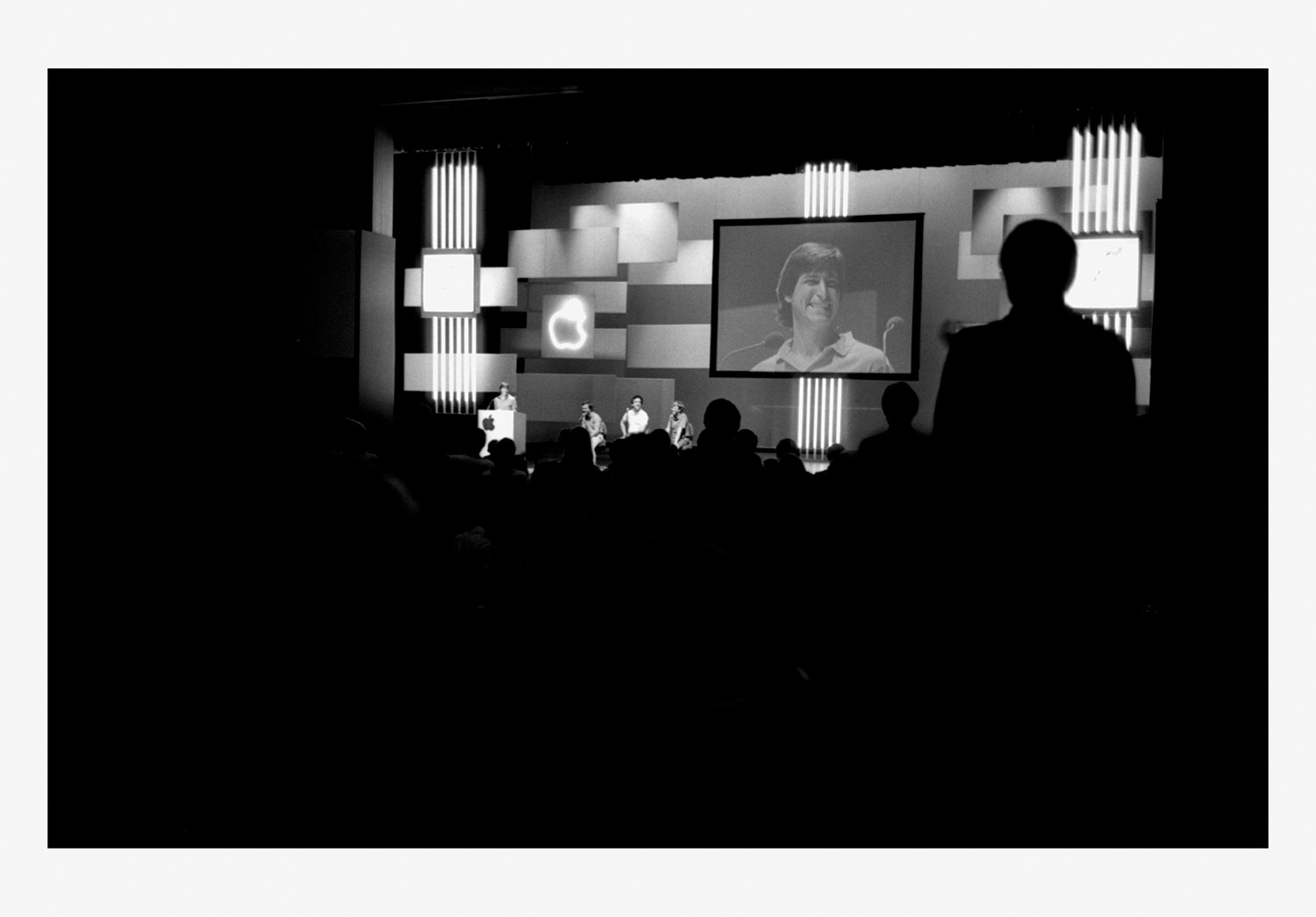
Viewed through a conference crowd, Steve's clean-shaven, grinning face is displayed on a large screen. 透过会议人群看到,大屏幕上是史蒂夫刮得干净、咧嘴微笑的脸。
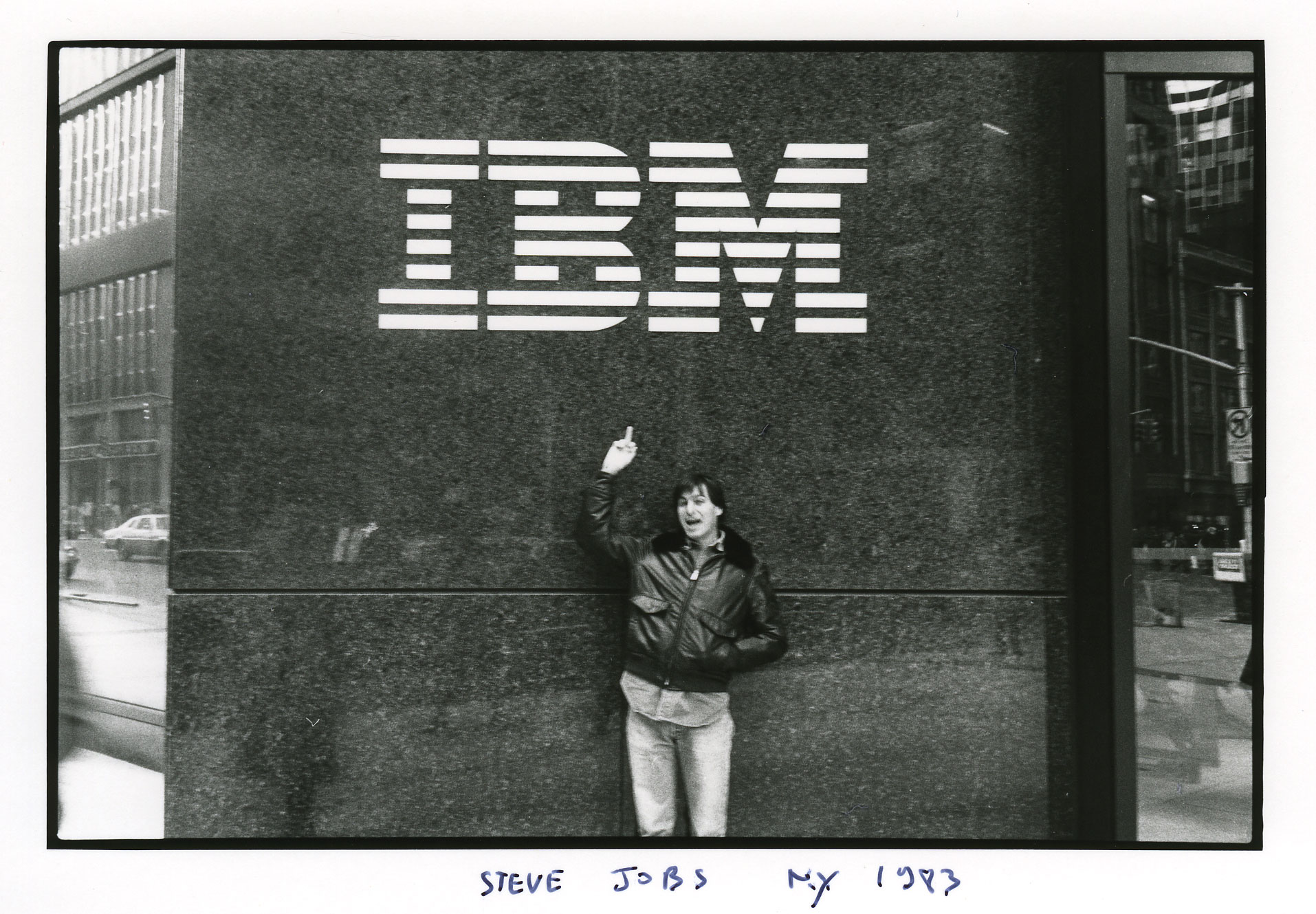
Steve, wearing a black leather jacket, holds his middle finger up toward a large IBM sign. 史蒂夫穿着黑色皮夹克,对着一个巨大的 IBM 标志竖起中指。
背景: 麦金塔还不到一岁,但显然 poised 要改变个人电脑行业时,史蒂夫向记者大卫·谢夫反思了它的意义
核心概念
- 麦金塔 (Macintosh) - 1984年革命性电脑
- 亚历山大·格雷厄姆·贝尔 (Alexander Graham Bell) - 电话的发明者
内容
中文翻译
我喜欢麦金塔的一点是,你可以写用Times Roman或Helvetica字体的备忘录,或者如果你想为派对增添乐趣,你可以用Old English字体,比如排球通知。或者你可以用非常严肃的字体处理非常严肃的事情。你可以表达自己。
这有点像1844年电报被发明时,它是通讯领域的惊人突破。你确实可以在下午从纽约发消息到旧金山。有些人谈到在美国每张桌子上放一台电报来提高生产力。但它不会奏效。它不会奏效。原因是你必须学会一整套奇怪的咒语——摩斯电码,点和划——来使用电报。学摩斯电码要花大约四十个小时。大多数人永远不会学会使用摩斯电码。
所以幸运的是,在1870年代,亚历山大·格雷厄姆·贝尔申请了电话的专利——另一项通讯领域的根本性突破,执行基本相同的功能,但人们已经知道如何使用它。最棒的是,除了让你用词语交流外,它还让你歌唱。它让你用超越简单语义的意义来吟诵你的话语。
我们今天处于完全相同的平行情况。有人说我们需要在美国每张桌子上放一台IBM PC来提高生产力。但这不会奏效。这次你必须学习的特殊咒语是斜杠qz之类的。大多数人不会学斜杠qz,就像他们不会学摩斯电码一样。
这就是麦金塔的全部意义。它是我们行业的第一部"电话"。但对我来说最棒的是,和电话对电报一样,麦金塔让你歌唱。它让你使用特殊字体。它让你制作图画和图片,或将其他人的图画或图片融入你的文档。
即使在商业中,你也看到五页备忘录被压缩成一页,因为有一张图片表达关键概念。所以我们看到纸张飞舞少了,沟通质量提高了。
而且更有趣。一直有个神话,说非常酷、有趣的人在家时突然变得非常沉闷、无聊和严肃,当他们来工作时,而这根本不是真的。所以如果我们能再次将这种人文精神注入这个非常严肃的商业领域,我认为这将是一个有价值的贡献。
英文原文
On the Macintosh, Make Something Wonderful

On the Macintosh

Macintosh was less than a year old—but clearly poised to transform the personal computer industry—when Steve reflected on its significance with reporter David Sheff.

One of the things I love is that with Macintosh, you can write memos that are Times Roman or Helvetica, or you can throw in an Old English if you want to have a little fun for a party, you know, for a volleyball announcement. Or you can use a very serious font for something very serious. And you can express yourself.

It's sort of like in 1844, the telegraph was invented, and it was an amazing breakthrough in communications. And you actually could send messages from New York to San Francisco in an afternoon. And some people talked about putting a telegraph on every desk in America to improve productivity.

But it wouldn't have worked. It wouldn't have worked. And the reason it wouldn't have worked was because you would have had to learn this whole sequence of strange incantations—Morse code in this case, dots and dashes in this case—to use the telegraph. And it took about forty hours to learn how to use Morse code. And a majority of people would never have learned how to use Morse code.

So fortunately, in the 1870s, Alexander Graham Bell filed the patents for the telephone—another radical breakthrough in communications that performed basically the same function, but people already knew how to use it. The neatest thing about it was that, in addition to allowing you to communicate with just words, it allowed you to sing. It allowed you to intone your words with meaning beyond the simple linguistics.

We're in the same exact parallel situation today. Some people are saying we need to put an IBM PC on every desk in America to improve productivity. But it won't work. The special incantations you have to learn this time are slash-qz's and things like that. Most people are not going to learn slash-qz's any more than they're going to learn Morse code.

And that's what Macintosh is all about. It's the first "telephone" of our industry. But the neatest thing about it to me is, the same as the telephone to the telegraph, Macintosh lets you sing. It lets you use special fonts. It lets you make drawings and pictures or incorporate other people's drawings or pictures into your documents.

Even in business, you're seeing five-page memos get compressed down to a one-page memo because there's a picture to express the key concept. And so we're seeing less paper flying around and more quality of communication.

And it's more fun. There's always been this myth that really neat, fun people at home all of [a] sudden get very dull and boring and serious when they come to work, and it's simply not true. So if we can again inject that liberal-arts spirit into this very serious realm of business, I think it would be a worthwhile contribution.
思考与洞察
- 类比的力量: 电报vs电话的类比完美解释了麦金塔的价值——不是功能更强,而是更易用
- 人文精神: 麦金塔让你"歌唱",而不仅仅是传达信息
- 表达自由: 不同字体让同样的文字可以表达严肃、趣味或任何情感
- 工作也可以有趣: 打破"工作时必须严肃"的迷思,将人文精神带入商业
- 沟通质量: 一图胜千言,图片让沟通更高效