斯坦福大学毕业典礼演讲
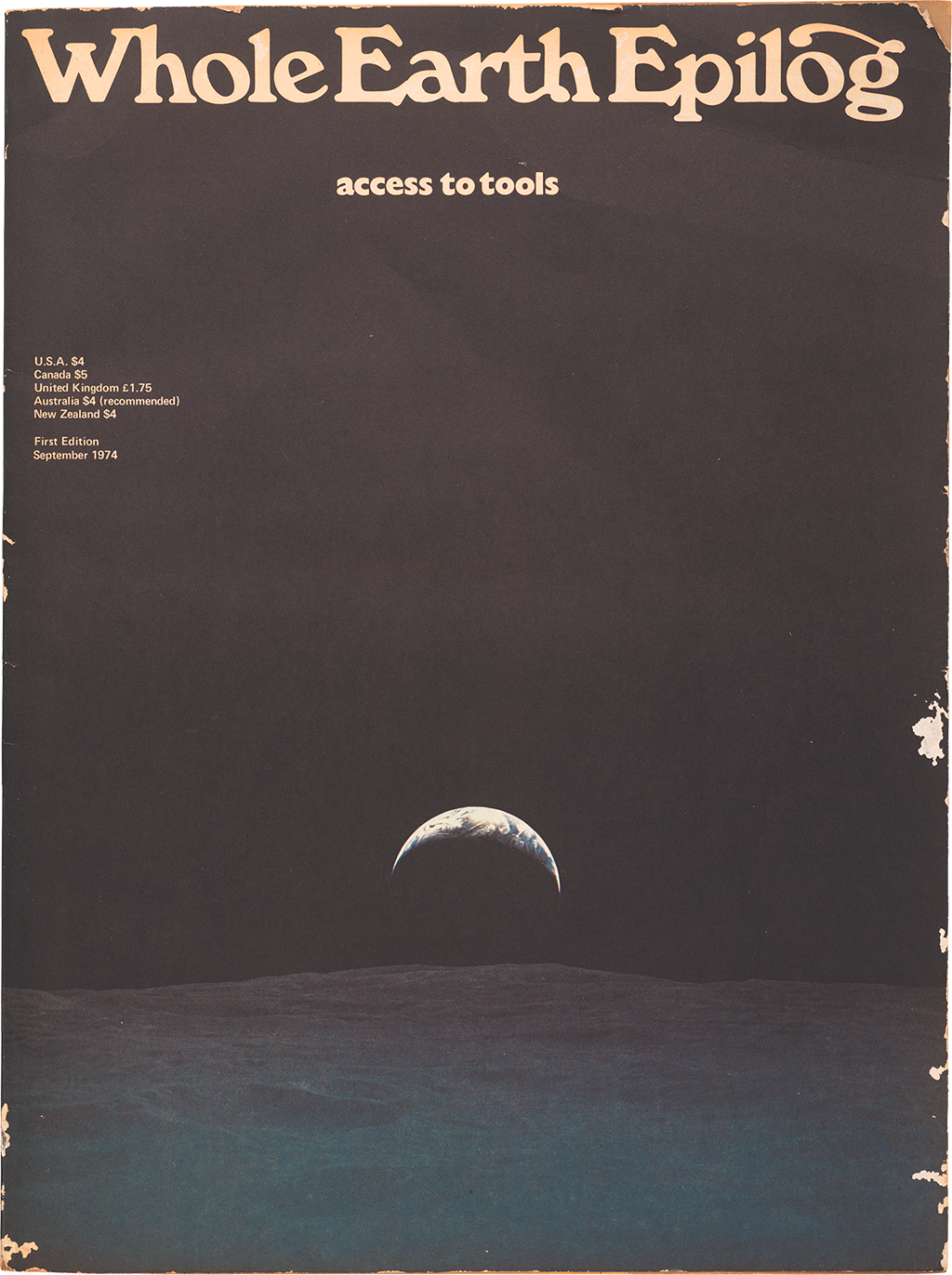
The front of 1974's Whole Earth Epilog, featuring a picture taken from the Moon of the Earth rising above the horizon. 1974 年《全球概览》终刊的封面。
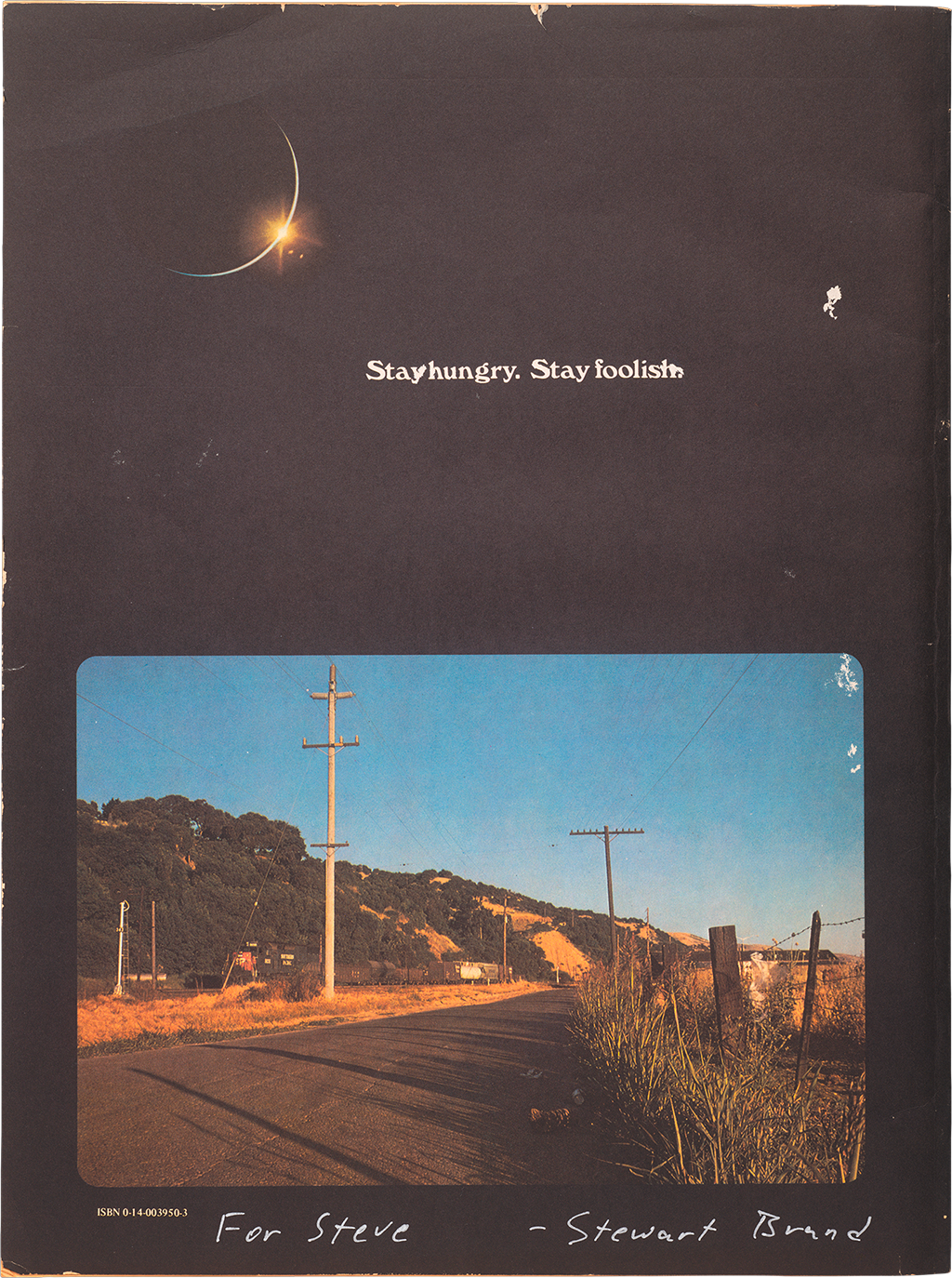
The back of 1974's Whole Earth Epilog. A handwritten message in white ink reads: For Steve —Stewart Brand. 1974 年《全球概览》终刊的封底。一条用白色墨水手写的留言写着:给史蒂夫——斯图尔特·布兰德。
背景: 2005年6月12日,史蒂夫在斯坦福大学发表毕业典礼演讲。主题: "保持饥饿。保持愚蠢。"
核心概念
- 三个故事 (Three Stories) - 生命中的三个故事
- 保持饥饿,保持愚蠢 (Stay hungry, stay foolish) - 来自《全球概览》
- 全球概览 (Whole Earth Catalog) - 斯图尔特·布兰德创办的杂志
- 里德学院 (Reed College) - 乔布斯就读的文理学院
- 苹果 (Apple) - 苹果公司
- 史蒂夫·沃兹尼亚克 (Steve Wozniak) - 苹果联合创始人
- 麦金塔 (Macintosh) - Mac电脑
- NeXT (NeXT) - NeXT公司
- 皮克斯 (Pixar) - 皮克斯动画工作室
- iPod (iPod) - iPod音乐播放器
内容
中文翻译
我很荣幸今天能与你们在一起,参加世界上最好的大学之一的毕业典礼。说实话——我从未从大学毕业。这是我离大学毕业最近的一次。今天我想告诉你们我生命中的三个故事。就这些。没什么大不了的。只是三个故事。
第一个故事是关于连接点。我在里德学院六个月后退学,但随后作为蹭课生又待了大约十八个月才真正离开。那么我为什么退学呢?
这在我出生前就开始了。我的生母是一个年轻的未婚研究生,她决定把我送养。她非常坚持我应该被大学毕业生收养,所以一切都安排好了,让我一出生就被一位律师和他的妻子收养。但当我出来时,他们在最后一刻决定他们真的想要一个女孩。所以我的父母,他们在等待名单上,半夜接到电话问:"我们有一个意外的男婴,你们想要他吗?"他们说:"当然。"我的生母后来发现我母亲从未从大学毕业,我父亲从未从高中毕业。她拒绝签署最终收养文件。直到几个月后,当我的父母承诺我会上大学时,她才让步。这是我生命的开始。
十七年后,我确实上了大学。但我天真地选择了一所几乎和斯坦福一样贵的大学,我工薪阶层父母的所有积蓄都花在我的学费上。六个月后,我看不到它的价值。
我不知道我想用我的生命做什么,也不知道大学如何帮助我弄清楚。我在这里花着我父母一生攒下的所有钱。所以我决定退学,相信一切都会好起来。当时很可怕,但回头看,这是我做过的最好决定之一。我一退学,就可以停止上那些我不感兴趣的必修课,开始蹭那些看起来更有趣的课。
这并不全是浪漫的。我没有宿舍房间,所以我睡在朋友房间的地板上。我退可乐瓶换五分钱押金买食物,我每周日晚上走七英里穿过城镇去哈雷克里希纳神庙吃一顿每周的好饭。我爱它。我通过跟随我的好奇心和直觉 stumble into 的很多事后来证明是无价的。让我给你一个例子。
里德学院当时也许提供了全国最好的书法教学。在整个校园,每张海报,每个抽屉上的每个标签,都是 beautifully 手工书写的。因为我退学了,不需要上正常课程,我决定上书法课学习如何做这个。我学习了衬线和无衬线字体,学习了不同字母组合之间空间的变化,了解了什么让伟大的排版伟大。它 beautiful、historical、artistically subtle in a way that science can't capture,我发现它 fascinating。
这一切在我的生活中没有任何实用应用的希望。但十年后,当我们设计第一台麦金塔电脑时,这一切回到了我。我们把它全部设计进Mac。它是第一台有 beautiful 排版的电脑。如果我从没在大学蹭过那门课,Mac永远不会有多重字体或比例间距字体。而且由于Windows只是复制Mac,很可能个人电脑也不会有。如果我从没退学,我就永远不会蹭书法课,个人电脑可能就不会有它们现在的 wonderful 排版。当然,当我上大学时,不可能向前连接这些点。但十年后回头看,非常、非常清楚。
再说一遍,你无法向前连接点;你只能向后连接它们。所以你必须相信这些点会以某种方式连接到你的未来。你必须相信某样东西——你的直觉、命运、生命、因果,无论什么。因为相信这些点会连接起来会给你信心跟随你的心,即使它带你离开 well-worn path。而这会带来所有不同。
我的第二个故事是关于爱和失去。我很幸运——我很早就找到了我热爱做的事情。沃兹和我在我二十岁时在我父母的车库开始苹果。我们努力工作,十年后苹果从车库里的我们两个人成长为一家拥有四千多名员工的20亿美元公司。我们刚刚发布了我们最好的创作——麦金塔——一年前,我刚满三十岁。然后我被解雇了。你怎么会被你创办的公司解雇呢?嗯,随着苹果的成长,我们雇佣了一个我认为非常有才华的人和我一起经营公司,第一年左右事情进展顺利。但后来我们对未来的愿景开始分歧,最终我们闹翻了。当我们闹翻时,我们的董事会站在他那边。所以,三十岁时,我出局了。而且非常公开地出局。我整个成年生活关注的焦点消失了,这是毁灭性的。
我真的有几个月不知道做什么。我觉得我让上一代企业家失望——我把接力棒掉在地上,当它传给我时。我见了大卫·帕卡德和鲍勃·诺伊斯,试图为搞砸了这么多道歉。我是一个非常公开的失败者,我甚至想过逃离硅谷。但有些东西慢慢开始 dawn on me——我仍然热爱我所做的。苹果的事件一点都没有改变这一点。我被拒绝了,但我仍然恋爱着。所以我决定重新开始。
我当时没看到,但事实证明被苹果解雇是发生在我身上最好的事情。成功的沉重被重新成为初学者的轻松所取代,对一切不那么确定。它让我 free 进入我生命中最有创造力的时期之一。
在接下来的五年里,我开了一家公司叫NeXT,另一家公司叫皮克斯,并爱上了一个 amazing 的女人,她成为了我的妻子。皮克斯继续创作了世界上第一部电脑动画故事片《玩具总动员》,现在是世界上最成功的动画工作室。在一个 remarkable 的转折中,苹果收购了NeXT,我回到了苹果,我们在NeXT开发的技术是苹果当前复兴的核心。劳伦和我有一个 wonderful 的家庭。
我很确定这一切都不会发生如果我没有被苹果解雇。那是 awful-tasting 的药,但我想病人需要它。有时生活会 hit you in the head with a brick。不要失去信心。我相信唯一让我继续前进的是我热爱我所做的。你必须找到你热爱的东西。这对你的工作和你对恋人一样真实。你的工作将占据你生命的很大一部分,唯一真正满足的方式是做你相信是伟大的工作。做伟大工作的唯一方式是热爱你所做的。如果你还没有找到,继续寻找。不要 settle。就像所有 heart matters 一样,当你找到它时你会知道。而且,像任何伟大的关系一样,随着 years roll on 它只会变得越来越好。所以继续寻找。不要 settle。
我的第三个故事是关于死亡。当我十七岁时,我读到一句引用,大意是,"如果你把每一天都当作生命的最后一天来过,总有一天你会非常肯定是对的。"它给我留下了印象,从那时起,过去三十三年,我每天早上照镜子问自己,"如果今天是我生命的最后一天,我想做我即将做的事吗?"每当答案连续太多天是"不"时,我知道我需要改变我生活中的某些东西。
记住我将死去是我遇到的最重要的工具,帮助我做出生命中的重大选择。因为几乎所有东西——所有外部期望、所有骄傲、所有对尴尬或失败的恐惧——这些东西在面对死亡时都会 fall away,只留下真正重要的。记住你将死去是我知道的避免陷入认为你有东西可失去的陷阱的最好方式。你已经 naked。没有理由不跟随你的心。
大约一年前,我被诊断出癌症。我早上7:30做了扫描,它清楚地显示胰腺上有一个肿瘤。我甚至不知道胰腺是什么。医生告诉我这几乎肯定是无法治愈的癌症类型,我应该预期活不过三到六个月。我的医生建议我回家把事情安排好,这是医生的 code for "准备死"。它意味着试图在几个月内告诉你的孩子你原以为会有未来十年告诉他们的所有事情。它意味着确保一切都 buttoned up,以便你的家人尽可能容易。它意味着说再见。
我整天带着那个诊断生活。那天晚上晚些时候我做了活检,他们把内窥镜从我的喉咙伸下去,穿过我的胃,进入我的肠道,把一根针放进我的胰腺,从肿瘤中获取一些细胞。我被镇静了,但我的妻子,她在那里,告诉我当他们在显微镜下看细胞时,医生开始哭,因为它结果是一种非常罕见的可治愈的胰腺癌形式。我做了手术,谢天谢地,我现在很好。
这是我离面对死亡最近的一次,我希望它是未来几十年我最近的一次。经历过它,我现在可以说这,比当死亡是有用的但纯粹 intellectual 概念时更肯定。
没有人想死。即使想去天堂的人也不想死到达那里。然而死亡是我们所有人都共享的目的地。没有人逃脱过它。那是应该的,因为死亡很可能是生命的 single best invention。它是生命的 change agent。它清除旧的为新的让路。现在新的是你,但某天,不久之后,你会逐渐变成旧的并被清除。抱歉这么戏剧化,但这是真的。
你的时间有限,所以不要浪费它过别人的生活。不要被教条 trapped——那是生活在他人思考的结果中。不要让其他人的意见 noise 淹没你自己的 inner voice。最重要的是,有勇气跟随你的心和直觉。它们以某种方式已经知道你真正想成为什么。其他一切都是 secondary。
当我年轻时,有一本 amazing 的出版物叫《全球概览》,那是我们这一代的 bibles 之一。它是由一个叫斯图尔特·布兰德的人创建的,就在这附近的门洛帕克,他用他的诗意 touch 给它带来了生命。这是在1960年代末,在个人电脑和桌面出版之前,所以它都是用打字机、剪刀和宝丽来相机制作的。它有点像平装书形式的谷歌,在谷歌出现前三十五年。它是 idealistic,overflowing with neat tools and great notions。
斯图尔特和他的团队发行了几期《全球概览》,然后,当它 run its course 时,他们发行了最后一期。那是1970年代中期,我和你们一样大。在他们最后一期的封底是一张清晨乡村道路的照片,那种你可能在搭便车时发现自己走的路,如果你足够冒险。下面有文字:"
保持饥饿。保持愚蠢。"那是他们签 off 时的告别信息。保持饥饿。保持愚蠢。我一直这样希望自己。现在,当你们毕业开始新生时,我那样希望于你们。保持饥饿。保持愚蠢。
非常感谢你们所有人。
英文原文
I am honored to be with you today for your commencement from one of the finest universities in the world. Truth be told—I never graduated from college. This is the closest I’ve ever gotten to a college graduation. Today I want to tell you three stories from my life. That’s it. No big deal. Just three stories.
The first story is about connecting the dots. I dropped out of Reed College after the first six months but then stayed around as a drop-in for another eighteen months or so before I really quit. So why did I drop out?
It started before I was born. My biological mother was a young, unwed graduate student, and she decided to put me up for adoption. She felt very strongly that I should be adopted by college graduates, so everything was all set for me to be adopted at birth by a lawyer and his wife. Except that when I popped out they decided at the last minute that they really wanted a girl. So my parents, who were on a waiting list, got a call in the middle of the night asking, “We have an unexpected baby boy; do you want him?” They said, “Of course.” My biological mother found out later that my mother had never graduated from college and that my father had never graduated from high school. She refused to sign the final adoption papers. She only relented a few months later when my parents promised that I would go to college. This was my start in life.
And seventeen years later I did go to college. But I naïvely chose a college that was almost as expensive as Stanford, and all of my working-class parents’ savings were being spent on my college tuition. After six months, I couldn’t see the value in it.
I had no idea what I wanted to do with my life and no idea how college was going to help me figure it out. And here I was spending all of the money my parents had saved their entire life. So I decided to drop out and trust that it would all work out OK. It was pretty scary at the time, but looking back, it was one of the best decisions I ever made. The minute I dropped out, I could stop taking the required classes that didn’t interest me and begin dropping in on the ones that looked far more interesting.
It wasn’t all romantic. I didn’t have a dorm room, so I slept on the floor in friends’ rooms. I returned Coke bottles for the five-cent deposits to buy food with, and I would walk the seven miles across town every Sunday night to get one good meal a week at the Hare Krishna temple. I loved it. And much of what I stumbled into by following my curiosity and intuition turned out to be priceless later on. Let me give you one example.
Reed College at that time offered perhaps the best calligraphy instruction in the country. Throughout the campus, every poster, every label on every drawer, was beautifully hand calligraphed. Because I had dropped out and didn’t have to take the normal classes, I decided to take a calligraphy class to learn how to do this. I learned about serif and sans-serif typefaces, about varying the amount of space between different letter combinations, about what makes great typography great. It was beautiful, historical, artistically subtle in a way that science can’t capture, and I found it fascinating.
None of this had even a hope of any practical application in my life. But ten years later, when we were designing the first Macintosh computer, it all came back to me. And we designed it all into the Mac. It was the first computer with beautiful typography. If I had never dropped in on that single course in college, the Mac would have never had multiple typefaces or proportionally spaced fonts. And since Windows just copied the Mac, it’s likely that no personal computer would have them. If I had never dropped out, I would have never dropped in on that calligraphy class, and personal computers might not have the wonderful typography that they do. Of course, it was impossible to connect the dots looking forward when I was in college. But it was very, very clear looking backwards ten years later.
Again, you can’t connect the dots looking forward; you can only connect them looking backwards. So you have to trust that the dots will somehow connect in your future. You have to trust in something—your gut, destiny, life, karma, whatever. Because believing that the dots will connect down the road will give you the confidence to follow your heart, even when it leads you off the well-worn path. And that will make all the difference.
My second story is about love and loss. I was lucky—I found what I loved to do early in life. Woz and I started Apple in my parents’ garage when I was twenty. We worked hard, and in ten years Apple had grown from just the two of us in a garage into a $2 billion company with over four thousand employees. We had just released our finest creation—the Macintosh—a year earlier, and I had just turned thirty. And then I got fired. How can you get fired from a company you started? Well, as Apple grew, we hired someone who I thought was very talented to run the company with me, and for the first year or so things went well. But then our visions of the future began to diverge, and eventually we had a falling-out. When we did, our board of directors sided with him. So, at thirty, I was out. And very publicly out. What had been the focus of my entire adult life was gone, and it was devastating.
I really didn’t know what to do for a few months. I felt that I had let the previous generation of entrepreneurs down—that I had dropped the baton as it was being passed to me. I met with David Packard and Bob Noyce and tried to apologize for screwing up so badly. I was a very public failure, and I even thought about running away from the Valley. But something slowly began to dawn on me—I still loved what I did. The turn of events at Apple had not changed that one bit. I had been rejected, but I was still in love. And so I decided to start over.
I didn’t see it then, but it turned out that getting fired from Apple was the best thing that could have ever happened to me. The heaviness of being successful was replaced by the lightness of being a beginner again, less sure about everything. It freed me to enter one of the most creative periods of my life.
During the next five years, I started a company named NeXT, another company named Pixar, and fell in love with an amazing woman who would become my wife. Pixar went on to create the world’s first computer animated feature film, Toy Story, and is now the most successful animation studio in the world. In a remarkable turn of events, Apple bought NeXT, and I returned to Apple, and the technology we developed at NeXT is at the heart of Apple’s current renaissance. And Laurene and I have a wonderful family together.
I’m pretty sure none of this would have happened if I hadn’t been fired from Apple. It was awful-tasting medicine, but I guess the patient needed it. Sometime life’s gonna hit you in the head with a brick. Don’t lose faith. I’m convinced that the only thing that kept me going was that I loved what I did. You’ve got to find what you love. And that is as true for your work as it is for your lovers. Your work is going to fill a large part of your life, and the only way to be truly satisfied is to do what you believe is great work. And the only way to do great work is to love what you do. If you haven’t found it yet, keep looking. Don’t settle. As with all matters of the heart, you’ll know when you find it. And, like any great relationship, it just gets better and better as the years roll on. So keep looking. Don’t settle.
My third story is about death. When I was seventeen, I read a quote that went something like, “If you live each day as if it was your last, someday you’ll most certainly be right.” It made an impression on me, and since then, for the past thirty-three years, I have looked in the mirror every morning and asked myself, “If today were the last day of my life, would I want to do what I am about to do today?” And whenever the answer has been “No” for too many days in a row, I know I need to change something.
Remembering that I’ll be dead soon is the most important tool I’ve ever encountered to help me make the big choices in life. Because almost everything—all external expectations, all pride, all fear of embarrassment or failure—these things just fall away in the face of death, leaving only what is truly important. Remembering that you are going to die is the best way I know to avoid the trap of thinking you have something to lose. You are already naked. There is no reason not to follow your heart.
About a year ago, I was diagnosed with cancer. I had a scan at 7:30 in the morning, and it clearly showed a tumor on my pancreas. I didn’t even know what a pancreas was. The doctors told me this was almost certainly a type of cancer that is incurable, and that I should expect to live no longer than three to six months. My doctor advised me to go home and get my affairs in order, which is doctor’s code for “prepare to die.” It means to try to tell your kids everything you thought you’d have the next ten years to tell them in just a few months. It means to make sure everything is buttoned up so that it will be as easy as possible for your family. It means to say your goodbyes.
I lived with that diagnosis all day. Later that evening I had a biopsy, where they stuck an endoscope down my throat, through my stomach, and into my intestines, put a needle into my pancreas, and got a few cells from the tumor. I was sedated, but my wife, who was there, told me that when they viewed the cells under a microscope the doctors started crying because it turned out to be a very rare form of pancreatic cancer that is curable with surgery. I had the surgery, and thankfully, I’m fine now.
This was the closest I’ve been to facing death, and I hope it’s the closest I get for a few more decades. Having lived through it, I can now say this to you with a bit more certainty than when death was a useful but purely intellectual concept.
No one wants to die. Even people who want to go to heaven don’t want to die to get there. And yet death is the destination we all share. No one has ever escaped it. And that is as it should be, because death is very likely the single best invention of life. It is life’s change agent. It clears out the old to make way for the new. Right now the new is you, but someday, not too long from now, you will gradually become the old and be cleared away. Sorry to be so dramatic, but it is quite true.
Your time is limited, so don’t waste it living someone else’s life. Don’t be trapped by dogma—which is living with the results of other people’s thinking. Don’t let the noise of others’ opinions drown out your own inner voice. And most important, have the courage to follow your heart and intuition. They somehow already know what you truly want to become. Everything else is secondary.
When I was young, there was an amazing publication called The Whole Earth Catalog, which was one of the bibles of my generation. It was created by a fellow named Stewart Brand, not far from here in Menlo Park, and he brought it to life with his poetic touch. This was in the late 1960s, before personal computers and desktop publishing, so it was all made with typewriters, scissors, and Polaroid cameras. It was sort of like Google in paperback form, thirty-five years before Google came along. It was idealistic, overflowing with neat tools and great notions.
Stewart and his team put out several issues of The Whole Earth Catalog, and then, when it had run its course, they put out a final issue. It was the mid-1970s, and I was your age. On the back cover of their final issue was a photograph of an early-morning country road, the kind you might find yourself hitchhiking on if you were so adventurous. Beneath it were the words, “Stay hungry. Stay foolish.” It was their farewell message as they signed off. Stay hungry. Stay foolish. And I have always wished that for myself. And now, as you graduate to begin anew, I wish that for you.
Stay hungry. Stay foolish.
Thank you all very much.
思考与洞察
- 三个故事: 连接点、爱和失去、死亡
- 书法课: 十年后Mac的 beautiful typography 源于里德学院的书法课
- 被解雇是最好的事: 被苹果解雇带来NeXT、皮克斯和劳伦
- 生命有限: "你的时间有限,不要浪费它过别人的生活"
- 死亡是生命的 single best invention: 死亡是生命的 change agent
- 保持饥饿保持愚蠢: 来自《全球概览》的告别信息
- 最广泛观看的演讲: 网上观看数百万次,纳入世界各地学校课程