迈克尔·莫里茨访谈
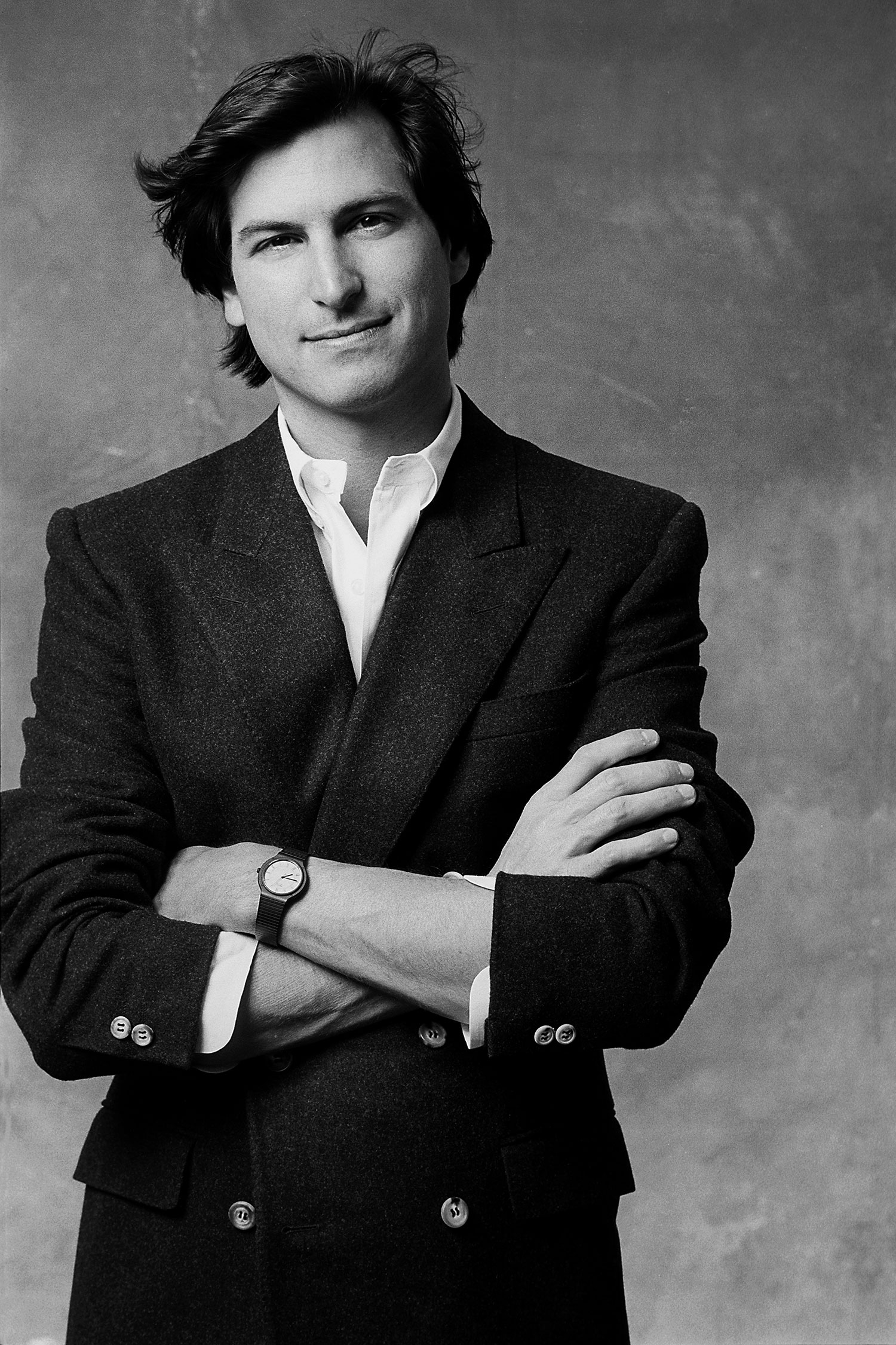
A glamorous magazine shot shows Steve, wearing a double-breasted blazer, with arms crossed and hair blowing in the wind. 一张迷人的杂志照片,史蒂夫穿着双排扣西装外套,双臂交叉,头发在风中飘扬。
背景: 1984年5月,史蒂夫和迈克尔·莫里茨(一位即将转行成为风险投资家的记者)在史蒂夫的办公室交谈。他们涵盖了广泛的话题,包括史蒂夫对产品设计的想法。
主题: "你的审美在犯错中变得更好"
核心概念
- 迈克尔·莫里茨 (Michael Moritz) - 记者,后来成为风险投资家
- 麦金塔 (Macintosh) - Mac设计
- Lisa (Lisa) - 太重不能便携
- 琼·贝兹 (Joan Baez) - 美国民谣歌手
- 惠普 (Hewlett-Packard) - Page Mill路建筑
- IBM (IBM) - 老大哥形象
内容
中文翻译
史蒂夫·乔布斯: 我们设计Mac的时候,我去看了Cuisinart料理机。就像我的Cuisinart周。
迈克尔·莫里茨: 但没有其他特定的产品[影响你]?比如说,从1970年代末开始的什么东西。
SJ: 嗯,我们一生都围绕着汽车。我从来不是车迷,但我一直喜欢大众甲壳虫。其实我也一直喜欢大众面包车。就是一堆小东西:酒标、画廊里的画作。就是简单的东西。不是什么真正深奥的东西,就是很多很多小东西。我不认为我的审美品味与很多人有太大不同。区别只是我变得非常固执,要让事情达到我们都知道它们能达到的那样好。这就是唯一的区别。
MM: 是啊,我觉得你太谦虚了。
SJ: 嗯,事情在你犯错时会变得更加精致。我有机会犯很多错误。你的审美在犯错中变得更好。但真正重要的是:如果你要做某样东西,把它做到真正出色并不需要更多能量——也很少需要更多钱。只需要多一点时间。不是多很多。而且要有这样做的意愿,有坚持下去直到真正出色的意愿。
但审美?我觉得审美很像歌唱。琼妮[贝兹]有美丽的嗓音,但她的嗓音美丽不是因为她的嗓音就是美丽。是因为她有非常好的耳朵。她可以听某人说三十秒钟,然后几乎完美地模仿他们的声音。她的耳朵极好。而且我想,同样地,好的审美来自你的眼睛。一种对你所看到的本能,而不是你做什么。
SJ: 我想建造比市场上今天的任何产品都小的产品。当你让东西更小时,你有能力让它们更精确。显然,一个完美的例子是手表。它很美,但精确度必须是物体本身的尺度,所以你让它非常精确。随着我们的产品变得更小,我们有机会这样做。所以,显然,我希望所有东西都能更小。
我也觉得能够随身携带产品真的很好。即使它们不是便携式的,能够有一个把手说"想改变我位置时就把我捡起来搬走"也很好。从房间搬到房间,或从办公室搬到办公室。Lisa太重了,不能从办公室搬到办公室,或从房间搬到房间,或周末带回家。所以问题是,"我们如何找到一种方法,把同样的功能包装成我们可以随身携带的东西,而且显然更小——并且能够更精确地表达它的形式?"这就是我们未来的方向,那些方向。
MM: 那些丑陋、冒犯性的产品设计是什么,还是太多了无法列举?
SJ: 是啊——随便挑三年前的任何一辆车,你知道?随便挑今天的大多数车。任何东西。看看房间周围。桌子、椅子:都丑。你可以问我,我在这个办公室里做什么?但无论如何,大多数东西都不是很好。
电话是个完美的例子。唯一曾经好用的电话是最初的那个和Trimline。Trimline是唯一体面的。他们对新东西做的只是垃圾。
SJ: [在苹果]我们只是变得越来越简单,越来越简单。非常、非常简单。简单。
SJ: 你见过Page Mill路上惠普的原始建筑吗?它们真的很棒。它们有这些扇贝形屋顶,玻璃面朝北,如果你真的想的话,你可以在上面放太阳能收集器。它们伸出来。在一栋建筑里,它们做成一整面玻璃墙。所以人们在那里工作,他们有大量的自然光进来。大量的光。
[苹果]这些建筑的问题是没有光。我的意思是,你在外面待五分钟,然后走进这里,真的很暗,你什么都看不见。我们都有点像住在这些小洞穴里。我只想要大量的自然光。
MM: "1984"广告里关于老大哥的那些东西是不是对IBM的东西很有意识,还是那是外人很快解读出来的,而你们不是要——
SJ: 否认它?
MM: 否认它。
SJ: 嗯,对此最好的回应是,我想,《财富》杂志给出的回应:"如果看到1984年的老大哥让大量人联想到IBM,那说明的更多是IBM的形象问题,而不是我们的意图。"
事实上:当然,我们看到了这个类比。而且我想我们在说两件事。我想第一件事是,计算机作为一群 centralized 的人控制非常强大的机器来追踪我们,这种形象——那种标志性的恐惧在我们心中——我们在评论我们拥有的那种文化恐惧。
当然,一个人不可能——除非你是白痴才看不到与IBM的相似之处。
英文原文
Interview with Michael Moritz, Make Something Wonderful

Interview with Michael Moritz

"Your aesthetics get better as you make mistakes."

Steve and Michael Moritz, a reporter who would soon switch careers and become a venture capitalist, spoke at Steve's office at Apple in May 1984. They covered a wide range of topics, including Steve's thoughts on product design.

Steve Jobs: I went around and looked at Cuisinarts when we were designing Mac. It was like my Cuisinart week.

Michael Moritz: But no other particular products [influenced you]? Say, from the late seventies or something.

SJ: Well, we're around automobiles our whole lives. I've never been a car guy, but I've always loved Volkswagen Beetles. I've always loved Volkswagen vans, actually, too.

Just a bunch of little things: wine labels, paintings in galleries. Just simple things. Not anything real profound, just lots and lots of little things. I don't think my taste in aesthetics is that much different than a lot of other people's. The difference is that I just get to be really stubborn about making things as good as we all know they can be. That's the only difference.

MM: Yeah, I think you're being modest.

SJ: Well, things get more refined as you make mistakes. I've had a chance to make a lot of mistakes. Your aesthetics get better as you make mistakes. But the real big thing is: if you're going to make something, it doesn't take any more energy—and rarely does it take more money—to make it really great. All it takes is a little more time. Not that much more. And a willingness to do so, a willingness to persevere until it's really great.

But aesthetics? I think aesthetics are a lot like singing. Joanie [Baez] has a beautiful voice, but the reason her voice is beautiful isn't because her voice is just beautiful. It's because she has an incredibly good ear. She can listen to somebody speak for thirty seconds and imitate their voice almost perfectly. Her ear is superb. And I think, in the same way, good aesthetics result from just your eye. An instinct of what you see, not so much what you do.

SJ: I want to build products that are inherently smaller than any of the products on the market today. And when you make things smaller, you have the ability to make them more precisely. Obviously, a perfect example of that is a watch. It's beautiful, but the precision has to be the scale of the object itself, and so you make it very precise. And as our products get smaller, we have the opportunity to do that. So, obviously, I would like everything to be smaller.

I also think that it's really nice to be able to carry products around. Even if they're not portable, it's very nice to be able to have a handle on them that says, "Pick me up and move me when you want to change where I am." Carry them from room to room, or from office to office. Lisa's too heavy to carry from office to office, or room to room, or home on the weekends. So the question is, "How do we find a way to package that same functionality into something that we can carry around with us and that is smaller, obviously—and be able to express the form of that more precisely?" That's where we're going in the future, those directions.

MM: What are the uglier, offensive designs of products, or are there just too many to list?

SJ: Yeah—pick any car before three years ago, you know? Pick most cars today. Anything. Just look around the room. Tables, chairs: all ugly. You can ask me, what am I doing in this office? But anyway, most things are not very nice.

The telephone's a perfect example. The only telephone that's ever been any good is the original one and the Trimline. The Trimline is the only decent one. What they've done to the new stuff is just garbage.

SJ: [At Apple] we're just getting simpler and simpler and simpler. Very, very simple. Simple.

SJ: Have you ever seen HP's buildings over on Page Mill Road, the original ones? They're really neat. They've got these scalloped roofs, and they face the glass north, and you can actually put solar collectors on them, if you wanted to. They stick out. In a building, they make a whole glass wall. And so people work down there, and they get tons of natural light coming in. Just tons.

The problem with these buildings [at Apple] is there's no light. I mean, you spend five minutes outside, and you walk in here, it's really dark, and you can't see anything. And we're all sort of like living in these little tiny caverns.

I just want a ton of natural light.

MM: Was all the stuff about Big Brother [in the "1984" commercial] very conscious of the IBM stuff, or was that something that outsiders quickly interpreted, and you guys weren't exactly going to—

SJ: Deny it?

MM: Deny it.

SJ: Well, the best response to that was the response given, I think, in Fortune, which was, "If seeing Big Brother in 1984 connotes IBM to a large number of people, that says more about IBM's image problem than our intentions."

In truth: of course, we saw the analogy. And I think that we were saying two things. I think the first thing we were saying was, this image of computers as sort of a centralized group of people having control of very powerful machines to keep track of us, that iconic fear in our minds—we were commenting on that cultural fear that we have.

And of course, one couldn't—you'd have to be an idiot not to see the parallels to IBM.
思考与洞察
- 从错误中学习: 乔布斯坦诚他的审美在犯错中变得更好,这种诚实很难得
- Cuisinart周: 从厨房电器中学习设计,显示他对日常物品的关注
- 让产品伟大不需要更多钱: 关键是时间和意愿,不是更多资源
- 审美如歌唱: 将审美比作耳朵的本能,强调直觉的重要性
- 小型化愿景: 1984年就预见产品会越来越小,最终成就了iPhone
- 老大哥的隐喻: 巧妙地承认与IBM的对比,但用幽默化解争议